
Table of Contents
Automated and robotic manufacturing continues to expand, including in material dispensing applications. While automation can minimize human error, it does not guarantee that every adhesive or sealant bead meets the production process's specifications. Variations in material placement, bead volume, equipment condition, and dispensing speed can all impact bead quality and ultimately, product quality.
One marketed solution is the Coherix 3D™ vision system, but is this system really worth the investment? Our team reviews the Coherix 3D inline bead inspection system and its capabilities.
About the Coherix 3D Vision System

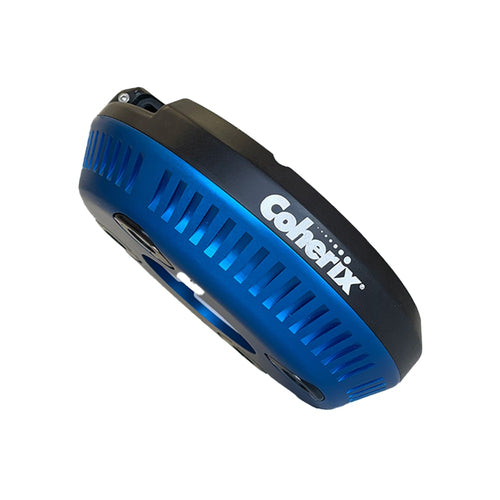
The Coherix 3D vision system provides inline inspection and reporting of material dispensing in automated applications. The system uses four high-speed sensors to provide a 360-degree view of dispensed beads. Depending on the application, the system can be set around the dispensing nozzle or installed in a pedestal-mounted configuration. The 3D sensors inspect each bead’s width, height, volume, continuity, and location. When these specifications fall outside acceptable tolerances, the system can report the defect and communicate the result to connected production controls.
Integrated with the right software, the Coherix 3D inspection system can also be programmed to take corrective action when variations are detected through what Coherix calls adaptive process control. Adaptive process control is a feedback loop in which the system uses real-time bead inspection data to initiate responsive actions to adjust for the error without the need for human intervention.
Some key features of the Coherix 3D robot vision system include:
- A 360-degree view around the nozzle
- Measurement of bead width, height, volume, continuity, and location
- Detection of gaps, skips, neck-downs, and other bead defects
- Collection of up to 400 samples per second from each sensor
- Robot-mounted and pedestal-mounted options
- Automatic adjustment to changes in robot speed
- Customizable reporting, data storage, and part-traceability options
- Optional integration for adaptive process control
Applications
The Coherix 3D adhesive inspection system is useful in a wide range of manufacturing applications requiring consistent adhesive bead dispensing. In some applications, bead inspection can help manufacturers meet specific industry mandates and regulations. In others, manufacturers may use the system to improve dispensing traceability and production efficiency.
Common industries for the Coherix 3D inline inspection system include:
- Automotive assembly
- EV battery assembly
- Electronics assembly
- Glass bonding
- Appliance manufacturing
Outside of these industries, the Coherix 3D inspection system can be beneficial for dispensing applications in which tolerances are tight, and precision is key. The vision system also processes up to 400 samples per sensor, so it is ideal for high-speed dispensing applications where manual inspection is not practical.
Our Honest Review of the Coherix 3D Inspection System
In our experience, even when bead inspection isn't mandatory for your dispensing application, it can be a necessity for manufacturers; they just may not realize it.
One benefit of Coherix's robotic vision system is its compact 3D sensor ring. Many competing systems rely on 2D imaging. Depending on their design, these systems may inspect bead presence, width, position, and continuity, but they generally do not provide the comprehensive data of a 3D system.
While the 3D imagery alone sets the Coherix 3D bead inspection system apart from other vision systems, the biggest selling point is its software integration for adaptive process control. This game-changing feature allows manufacturers to use real-time feedback to adjust processes as needed to ensure that dispensing stays within specified conditions. The system can take corrective action, such as repairing certain bead defects, adjusting bead volume, alerting an operator, or stopping the manufacturing process. Adaptive process control can lead to better consistency, less scrap and rework, better traceability, and greater production efficiency, all of which can lead to significant cost savings.
The biggest limitation of the Coherix 3D robot vision system is the initial cost and startup effort. Planning and integration of the dispensing solution and software into your existing production line calls for time, money, and technical knowledge. We recommend working with an experienced integrator and dispensing system provider to help configure and install the system while minimizing downtime.
Speak with the Experts
At Dispensing.com, we have been in the adhesive dispensing industry since 1971 and have seen the evolution of dispensing equipment over the years. As automated and robotic manufacturing expands, inline inspection and traceability tools are becoming increasingly important in production processes with strict quality, documentation, or process-control requirements. Coherix 3D bead inspection systems are one such tool that can increase traceability and efficiency.
If you want to learn more about the Coherix 3D adhesive bead inspection system or robotic vision systems for dispensing in general, you can connect with our team. We have the experience and dispensing expertise to provide comprehensive robotic dispensing solutions for manufacturers in different industries and with a range of applications. Get started.