
In dispensing applications, one missing or misplaced adhesive bead can lead to major issues that can cost a business wasted time and money. Fortunately, these problems may be avoided.
We talked with two team members from Coherix about robot vision systems and the growing need for real-time adhesive bead inspection and adaptive process control in automated dispensing applications.
Who Is Coherix?
Coherix is a company that creates 3D adaptive process control systems for dispensing applications. It is an American company based in Michigan but has operations worldwide with over 5,000 systems installed globally. Coherix has been in the industry since 2003 and is leading the way in real-time adhesive bead inspection and adaptive process control for sealants, adhesives, and other material dispensing.

We talked with Steven Pagalos (pictured) and Josh Anton about their thoughts on the future of automated adhesive dispensing in manufacturing. Steven Pagalos is one of Coherix's Technical Account Managers. He has been with Coherix for 16 years and was previously an Application Engineering Manager for the company. He was able to shed light on the more technical side of this equipment. To translate some of the engineer-ese, we also spoke with Josh Anton, the Marketing Communications Manager for Coherix.
Dispensing Systems Alone
While automated and robotic dispensing systems are great for several reasons, including increasing throughput and improving efficiency, they are not perfect. Issues can arise when it comes to quality control and accurate material dispensing.
As Anton noted, "A lot of dispensing machines will tell you how much volume comes out of the dispensing nozzle but can't tell you if it ends up on the part, the floor, or if it's on the right part of the part."
Consequently, an entire run of products could have misplaced adhesive, an incorrect amount of adhesive, or missing adhesive altogether. These defects can quickly add up and cost manufacturers valuable time and money they can never get back.
Giving Robots Eyes
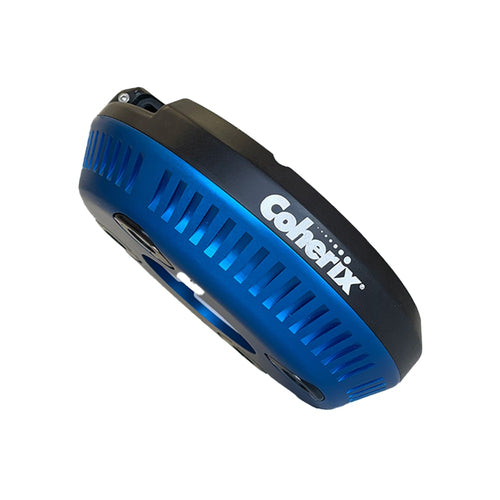
To combat these problems, Coherix and other companies developed robot vision systems that use cameras or sensors to inspect the dispensing process. Anton simplified this as, "We're providing the eyes for the robot."
Pagalos further explained, "We're measuring the bead in 3D. We understand how much material is being dispensed and where it's being dispensed." Robot vision systems do adhesive bead inspection to not only assess whether or not the adhesive was applied, but also to track metrics like bead placement, volume, length, and continuity.
These systems are often attached directly to the dispensing nozzle and may be connected to computer software and integrated with the manufacturing process.
Moving to Real-Time
While robot vision systems can give insight into adhesive bead dispensing, there are some limitations. Many systems work in 2D and are limited in their glue bead inspection to after the fact. They typically only assess whether or not the bead was dispensed and if it is in the right spot after dispensing is over.
Coherix started with 3D, knowing the challenges and limitations of 2D systems. "We learned in our development of the system about some of the challenges around existing systems, 2D systems primarily-lighting was a challenge, color of the material, color of the parts, and user experience. So all of those things fed into our development of a 3D solution." Pagalos explained.
Coherix's 3D system uses a laser to read 400 times a second to inspect the bead in real time, including its volume, length, and continuity. Consequently, it can get a more comprehensive picture of the dispensed adhesive or material.
Inspection Is Necessary, But Non-Value Add
Although helpful, robot vision systems are often seen as an add-on to automated dispensing systems that can help manufacturers check adhesive bead inspection off their list.
As Pagalos noted, "To quote our CEO, 'Inspection is necessary, but non-value add.' So what that means is people have the equipment, they're dispensing a bead, and they don't want to inspect it if they don't have to; they just want it to work. But for many applications, you have to guarantee that the material is there and there's enough of it."
A large portion of Coherix's business comes from the automotive industry, including vehicle subassembly, general assembly, battery manufacturing, and final assembly. Not only is accurate dispensing imperative due to the nature of these applications, but also a growing number of tiers and OEMs are mandating the use of robot vision systems in manufacturing.
While the 3D, real-time bead inspection may just be a way to stay compliant with these regulations, Coherix is offering a lot more.
Getting More Value
Coherix is pushing past just 3D adhesive bead inspections and using robot vision systems to create significantly more value for businesses. Pagalos explained, "What we've been developing since is what we call adaptive process control solutions. So, software tools on top of inspection that actually can add value to our product in the dispensing process."

Other systems will inspect the bead after the dispensing is done. If there is a mistake, there may not be an opportunity to fix it. In some cases, entire runs of products could make it through production before the error is caught.
Instead, Coherix is coupling its real-time adhesive bead inspection with adaptive process control. Software is integrated with their sensors to not only catch errors immediately but also to fix them. When an error is detected, the robot is told to take some sort of corrective action without the need for operator intervention.
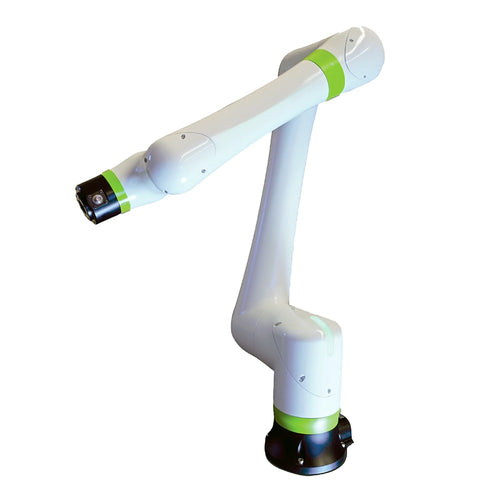
Pagalos elaborated, "If we detect a gap or a neck down where there's not enough material, we actually work with the robot in the dispensing system to go back and add material." He added, "So you don't have to reject the part and then manually go in with a glue gun and fill it in, which takes however long to alert someone to do that and then a team member to do that function. We could just do it in process."
This setup can lead to many benefits for manufacturers and a huge ROI beyond a simple bead inspection system. Defects and errors can be caught during dispensing and corrected to drastically decrease scrap and rework. Cycle time savings can increase and lead to higher throughput. Traceability becomes a reality to protect manufacturers from warranty claims and help them meet compliance regulations.
Dynamic Adjustments for Optimized Manufacturing
Not only can adaptive process control mitigate major errors to save your company time and money, but also it can make dynamic adjustments to process variations to optimize your dispensing process. These capabilities stretch far beyond basic inline bead inspection.
Pagalos explained, "We dynamically adjust the robot or the nozzle to make sure we're putting the bead in the right spot, it's the right distance from the part surface, and it's the right distance from the part edge or a feature like a hole."
Coherix's adaptive process control system includes Z-height tracking, lateral tracking, and dynamic volume adjustment. He continued, "We can account for variation in the process over time, like temperature, viscosity of material, minor buildup in the hose, or nozzle buildup—all these things that can impact what the bead actually looks like on the part... We can track all of that and feed back into the process dynamically so you don't have as much variation."
This system can be used to ensure the accuracy and integrity of the bead regardless of the part or process variation. Simplified, manufacturers can optimize their dispensing process and material use.
The Way of the Future
The reality is that Coherix's bead inspection and adaptive process control are the way of the future for automated dispensing, and eventually everyone will have to use them.
As Pagalos noted, "You can find various systems out there to just take a picture of a part... but dispensing is an art form. It's a very fluid process; it's going to change. So, you want a system that can not only monitor that, but then also adapt."
If you have more questions about these systems, you can talk with our team. We have been in the dispensing industry for over 50 years and have seen advancements in technology firsthand. We also offer equipment integration services to help you connect this type of equipment, systems, and software into your existing manufacturing process.