
Table of Contents:
- What Is a Tool Center Point?
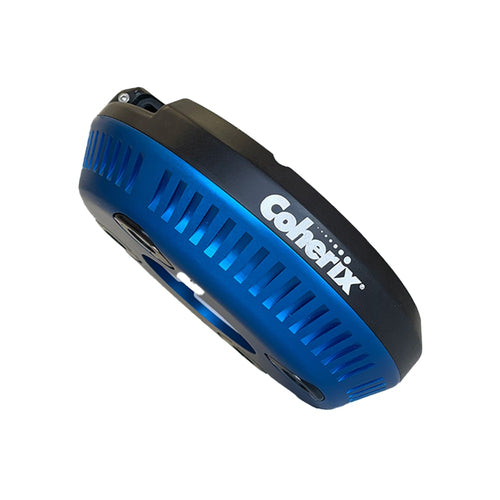
- What Is a TCP Locator?
- TCP Locator Versus Bead Inspection
- How It Works
- Why a Nozzle Can Deviate from Its Programmed TCP
- Benefits of an Automated TCP Locator
- FAQs
The accuracy of a robotic dispensing system depends on its programming, setup, process control, and positioning. Although production environments are automated, they remain dynamic, and things can still go wrong. Even a slight, unnoticed shift in nozzle placement can place a bead off target. For critical applications, this small error can be significant and make the finished product defective. Manufacturers wanting to avoid such problems need systems in place to mitigate these issues.
What Is a Tool Center Point?
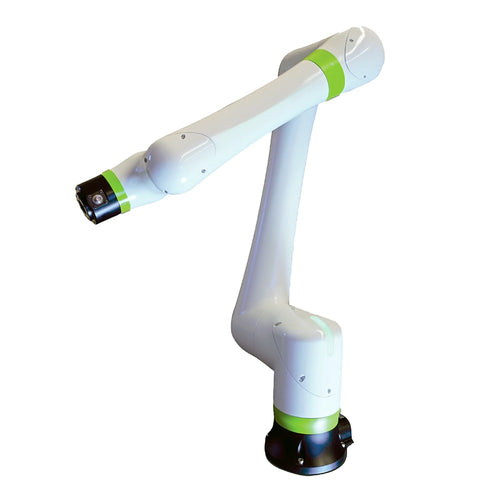
A tool center point or TCP is used by a robot to define the positioning and orientation of the working end of what it is holding relative to its tool flange. While the robot controller can calculate the position of its tool flange, it does not inherently know the location and orientation of the attached tool’s working point. The TCP defines that position and orientation relative to the tool flange.
In dispensing applications, the tool is an applicator, and the TCP is commonly defined as the nozzle tip. Accurate bead placement relies on how accurately that point is defined.
What Is a TCP Locator?

During production, the physical location of the tool tip can deviate from the TCP stored in the robot controller because of nozzle wear, bending, replacement, collisions, or other tooling changes. To mitigate this issue, a TCP locator is a device that measures the physical tool tip relative to a calibrated reference and determines whether its position deviates from the TCP stored in the robot controller. The purpose of a tool center point locator is to check whether the tool tip remains within specified tolerances. Depending on the system, it will alert the operator of the error or automatically correct the TCP to account for the deviation.
Traditionally, operators often performed a manual robot TCP calibration by moving the tool tip to the same fixed reference point from several orientations. The controller would then use that information to calculate the TCP offset. Although this process works, it is a slow process that requires production to stop and can lead to variations based on the operator. An automated tool center point locator uses sensing hardware and software to provide more consistent, repeatable measurements with less operator influence.
A TCP locator can be used anywhere placement tolerance is tight, the nozzle is vulnerable, or the cost of a missed deviation is high. Common applications for a tool center point locator include:
- Microdispensing
- Two-component dispensing with flexible or replaceable nozzles
- Automated sealing and bonding
- Applications with tight bead-placement tolerances
- Cells with frequent nozzle changes
TCP Locator Versus Bead Inspection in Dispensing
Tool center point locators and real-time bead inspection systems can both be integrated into robotic dispensing lines. The two can act as complements to one another, but they perform distinctly different functions.
| TCP locator | Bead inspection | |
|---|---|---|
| What it measures | The position of the nozzle tip and sometimes its orientation | Characteristics of the material bead that was dispensed |
| When it acts | At programmed checkpoints (before production, between dispensing cycles, or after a nozzle change) | During dispensing or immediately after |
| The question it answers | Is the tool where we think it is? | Did we lay down a bead with the right specifications? |
Together, both tools can verify key aspects of the dispensing process and determine if it is working within defined specifications and alert operators to errors for early correction.
How a TCP Locator Works in Dispensing
An automated tool center point locator that works in a closed-loop system follows four basic steps.
-
Measure the actual nozzle position
The robot presents the nozzle to the sensor. Inline sensing captures the tip's actually position in three dimensions. Manual methods perform a comparable step with a touch-off to obtain approximate measurements.
-
Compare the nozzle position against the nominal TCP
The measured position is evaluated against the tool center point the robot is currently using. The output is a deviation, including how far off the nozzle is and in which direction.
-
Calculate and transmit the offset
The system calculates the positional offset and transmits the correction through the system to the robot. If the deviation exceeds a user-defined limit, the system can alert the operator for prompt inspection or corrective action.
-
Apply the correction
When an offset is transmitted, the robot dynamically compensates for the measured nozzle position so the bead follows the intended path.
Because it operates in a closed loop, the system can quickly compensate for an acceptable deviation caused by a bent or misaligned nozzle. You can minimize the number of parts scrapped because inaccurate dispensing was not discovered until the parts reached the end of the production line.
Why a Nozzle Can Deviate from Its Programmed TCP
Even the slightest deviation can lead to scrap and defective parts during production. A TCP locator is useful because the nozzle can shift during production for multiple reasons, including:
- Nozzle contact- Even light contact with a part, fixture, or purge cup can bend the nozzle.
- Deflection under load- Small-gauge and flexible nozzles can shift from material pressure or their own motion at speed.
- Wear- Normal wear can alter the nozzle outlet or tip geometry. Abrasive-filled materials may accelerate this wear, potentially affecting bead geometry and, in some cases, the functional position of the dispensing point.
- Thermal effects- Heated applicators and hot materials can expand the tooling.
- Nozzle changeover- A replacement nozzle may not return to exactly the same position as the previous nozzle.
- Crashes and maintenance- Anything that requires removing and reinstalling the applicator can reset the position and geometry.
While these factors may cause deviations that are not visible to the human eye, the deviations can still impact the dispensing process. If the robot continues operating as is, the bead will continue to be in the wrong place until the problem is resolved.
Benefits of an Automated TCP Locator
Although it is a small part of the manufacturing setup, a tool center locator can have a significant impact. If you are unsure whether a TCP locator is necessary for your dispensing application, consider these benefits.
Consistent Bead Placement
The most obvious benefit of a tool center positioning locator is that you can better ensure consistent placement of the material relative to the part, not relative to a nozzle position that is no longer accurate.
No Need for Manual Recalibration
Manual TCP calibration generally requires trained personnel and stops production. It also should be repeated after every nozzle change or when TCP drift is suspected. Altogether, manual recalibration can contribute to a lot of unnecessary downtime and labor that automation can help avoid.
Less Scrap and Rework
When incorrect bead placement is not discovered until the end of the line, every part from there to the dispenser may also be defective. A tool center point locator can help you catch the error closer to the source and minimize the number of defective parts.
Real Process Stability
Manual calibration can produce different results depending on who performs it, while an automated TCP measurement is more likely to produce the same results every time. Any variation in data is real process variation rather than measurement noise.
Less Downtime
A tool center positioning locator can help decrease the number of times production stops for manual calibration or quality control.
Support for Difficult Nozzles
Flexible and small-gauge nozzles can often deflect, but they are also hard to calibrate manually. Automated measurement reduces reliance on an operator’s visual judgment during routine TCP checks.
Need Assistance?
A TCP locator is not a standalone purchase so much as an integration decision. The equipment needs to fit into your real-world production process to ensure repeatability and efficiency.
You can explore the Coherix 3D TCP Locator for yourself and then talk with our team about your application. We have been in the dispensing industry for over 50 years and can help with dispensing system integration.