
Table of Contents
- What Is a Metering Pump?
- Rod Metering Pumps (RMP)
- Cylinder Metering Pumps (CMP)
- Gear Metering Pumps (GMP)
- RMP vs. CMP vs. GMP for Dispensing Systems
- How to Select the Right Metering Pump
- Metering Pump Recommendations
- FAQs
Selecting the right type of metering pump can impact the accuracy and reliability of your dispensing as well as the efficiency of your work. While there are many different design styles of metering pumps for dispensing, three stand out: rod metering pumps, cylinder metering pumps, and gear metering pumps.
Each pump design works differently and offers its own advantages and disadvantages depending on the application. We break down the differences between rod metering pumps, cylinder metering pumps, and gear metering pumps, including how they work, their performance, and their applications.
What Is a Metering Pump?
Before we can talk about the different types of metering pumps, it is important to understand what a metering pump is. A metering pump is any pump used to deliver a specified and controlled volume of a fluid or material. They are most often positive displacement designs and are known for their consistency and accuracy in delivering repeatable volumes. Volume can typically be adjusted as needed, but the ease of adjustment varies by pump design.
Metering pumps are commonly used with adhesives, sealants, coatings, and other materials. There are also different design styles and types of metering pumps that can change in terminology depending on the brand. The differences lie in how they create displacement as well as how they handle pressure, viscosity, and flow style.
Rod Metering Pumps (RMP)

Rod metering pumps are piston-based positive displacement pumps that dispense a fixed volume of material by using a reciprocating rod that moves back and forth inside a chamber to displace the material. The term “rod metering pump” is often used descriptively or by manufacturers rather than being a distinct industry-standard pump classification.
Rod metering pumps work in a cycle and are designed to deliver reliable shot sizes. With each intake stroke, the rod retracts, and material is drawn into the chamber. On the discharge stroke, the material is displaced and pushed out of the pump by the rod through controlled valves. One of the primary advantages of rod metering pumps is their consistent volume delivery. RMP pumps are commonly used in shot-based dispensing where accuracy and reliability are more important than continuous flow.
While it depends largely on the machine itself, some applications for dispensing systems with rod metering pumps can include:
- Firestop materials
- Crack injection
- Concrete repair
- Joint filling
Cylinder Metering Pumps (CMP)
 Cylinder metering pumps are a type of positive displacement pump design that uses a precision-machined piston moving inside a cylinder to dispense a fixed volume of material. The main advantage of cylinder metering pumps is their tight internal tolerances that help them achieve high levels of repeatability in material volume. One potential disadvantage of cylinder metering pumps’ tight tolerances is that they make them more sensitive to contamination and abrasive materials.
CMP pumps are able to maintain a high amount of accuracy across a range of operating pressures, but performance can still be impacted by other sources. As a result, they are commonly used in highly regulated applications where precision is imperative.
While it depends on the capabilities of the specific machine, some applications for cylinder metering pump dispensing systems can include:
- Crack filling
- Joint filling and sealing
- Caulking
- Mold filling
- Product assembly
Gear Metering Pumps (GMP)

Gear metering pumps are a type of metering pump design that uses interlocking rotating gears to move material through the pump body. With each rotation, a fixed volume of material is displaced and pushed out of the pump. Unlike with rod metering pumps, gear pumps are essentially pulse-free and provide a smooth continuous flow of material. This continuous output is a major advantage of gear metering pumps.
Because of their continuous flow, gear metering pumps for adhesives are ideal for applications where steady output is required and are often used in automated production lines. When designed with extremely tight tolerances, they are compatible with high viscosity materials, temperatures, and pressures, but gear metering pumps with standard gear materials and clearances are generally not recommended for materials with abrasive fillers due to accelerated internal wear.
Each machine is unique, but some applications for metering gear pump dispensing systems can include:
- Concrete repair
- Caulking
- Joint filling and sealing
- Mold filling
- Potting and encapsulation
RMP vs. CMP vs. GMP for Dispensing Systems
While these pumps are similar, they have important distinctions. To help highlight their differences, our team has put together the table below.
| Feature | Rod Metering Pumps (RMP) | Cylinder Metering Pumps (CMP) | Gear Metering Pumps (GMP) |
|---|---|---|---|
| Flow Style | Shot-based | Shot-based | Continuous |
| Accuracy | High | Very high | Moderate to high |
| Ideal Volume | Small to moderate shots | Very small, precise shots | Moderate to high flow |
| Material Type | Viscous, filled | Clean, controlled | Clean, non-abrasive |
| Pressure Capability | High | Very high | Moderate |
| Best Use | Ratio-critical dispensing | Maximum precision | High-throughput automation |
Of course, these differences vary largely by the pump’s design, tolerances, and control system, so it is important to review a dispensing system’s technical specifications and evaluate the individual system.
How to Select the Right Metering Pump
Now that you better understand the differences between RMP, CMP, and GMP designs, the next step is determining which design is right for your needs. In most cases, choosing the right metering pump design mostly comes down to the following three factors:
1. What You Are Pumping
Start by evaluating the material itself and its properties, like viscosity and abrasiveness.
- If the material is thick or heavily filled, rod metering pumps are often a strong choice because they handle higher viscosities and pressure changes well.
- If the material is clean and free of abrasives, cylinder metering pumps or gear metering pumps may be suitable, depending on accuracy and flow needs.
- If the material contains abrasive fillers, pumps with appropriate wear-resistant materials and seals should be used.
2. How Much You Are Pumping
Match the pump capacity to the volume.
- Choose a rod metering pump when you are dispensing moderate volumes in defined shots.
- Choose a cylinder metering pump when you are dispensing smaller volumes where extremely tight control over shot size is required.
- Choose a gear metering pump when you need to move higher volumes of material in a continuous flow.
3. How You Need to Pump It
Match the pump style to the application.
- Choose a rod metering pump for shot-based dispensing of viscous materials.
- Choose a cylinder metering pump when maximum precision is required and materials are clean.
- Choose a gear metering pump for smooth, continuous dispensing in automated or high-throughput environments.
Following this approach can help you quickly narrow down your options and ensure the pump you select aligns with both your material properties and process requirements.
Metering Pump Recommendations
Even if you think you know which type of metering pump design you need, it can still be hard to know exactly which dispensing system is right for your application. To help, our team is sharing a few of our favorite metering pumps by type as well as some applications the systems are best suited for.
Rod Metering Pumps
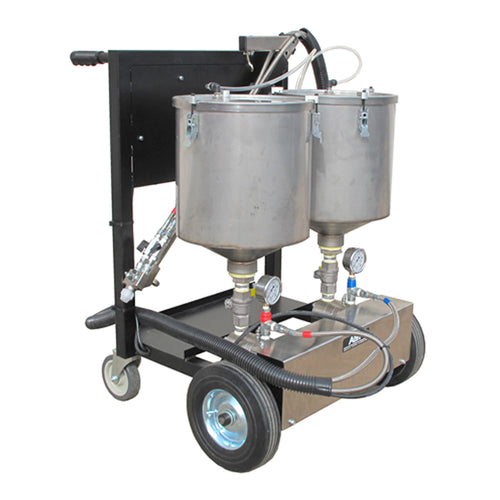
- AST RMP 317- crack injection, concrete repair, delaminated bridge deck repair
- AST RMP 624- dowling, joint filling, traffic delineators, railroad tie bonding
Cylinder Metering Pumps
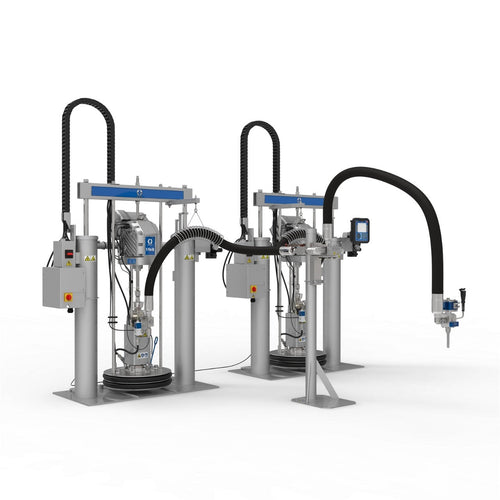
- SP 5 Pail Pump- expansion joints, concrete repair, crack filling, joint filling and sealing
- SP 55 Drum Pump- caulking, expansion joints, joint filling and sealing
Gear Metering Pumps
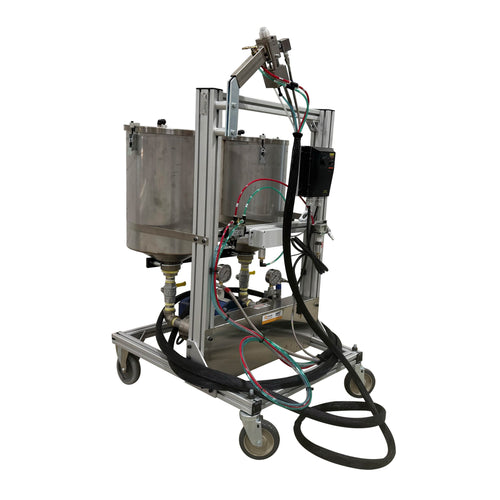
- AST GMP 025- bridge crack repair, joint filling and sealing
- AST GMP 075- caulking, joint filling and sealing, mold filling, potting and encapsulation
Need More Help?
Rod metering pumps, cylinder metering pumps, and gear metering pumps each serve a distinct role in industrial dispensing. No single pump is best for every application, but each excels when used in the right conditions.
If you need help determining what type of metering pump to use or which dispensing system is best, we want to help. Our team can provide you with an equipment recommendation based on your specific needs. Contact us today to get started.