
Table of Contents
- What Are Robotic Dispensing Systems?
- Benefits of Robotic Dispensing Systems
- Types of Robotic Adhesive Dispensing Systems
- How to Choose a Robotic Dispensing System
- FAQs
Manufacturers across industries are under increasing pressure to speed up production and increase throughput. The problem is staying consistent and maintaining quality control. Manual dispensing processes can only get manufacturers so far. To keep up with growing demand and stay consistent, more manufacturers are turning to automated robotic dispensing systems.
Picking the right robotic dispensing system is no easy task. Especially if you are exploring automated material dispensing for the first time, choosing an adhesive dispensing robot can feel overwhelming. In this guide, we will walk you through the major types of robotic dispensing systems, the most important buying considerations, and how to identify the best solution for your production environment.
What Are Robotic Dispensing Systems?
Robotic adhesive dispensing systems use automation to supply, manage, and apply adhesives, sealants, coatings, and other materials to substrates during the production process. Automated dispensing systems can range from simple benchtop systems to fully integrated industrial robots. They are known for their consistency, precision, and repeatability.
Robotic dispensing systems setups may include:
- A motion platform
- Adhesive supply equipment
- Pumps or metering systems
- Dispensing valves or applicators
- Controllers and software
- Sensors and inspection systems
- Safety equipment and guarding
These automated dispensing systems are also used across a wide range of industries and production processes, including:
- Structural bonding
- Product assembly
- Gasketing and sealing
- Potting and encapsulation
- Bead dispensing
- Medical device manufacturing
- Electronics assembly
- Packaging and labeling
- Thermal interface material dispensing
Benefits of Robotic Dispensing Systems
Manual adhesive application is often suited for low-volume production, but as operations grow, manual systems typically struggle to keep up. Issues such as inconsistent bead sizes, excessive adhesive waste, operator fatigue, downtime, and rework can quickly arise to reduce efficiency and profitability. Robotic dispensing systems can help minimize, or in some cases, eliminate these issues.
Some of the key benefits of robotic adhesive dispensing systems include:
- Repeatability and consistency
- Precision and accuracy
- Reduced human and operator error
- Increased throughput and faster production speeds
- Reduced material waste
- Traceability and process monitoring
In some cases, robotic dispensing systems also allow manufacturers to automate applications that would be difficult or impossible with fixed dispensing equipment and improve worker safety.
Types of Robotic Adhesive Dispensing Systems
To choose a robotic adhesive dispensing system, it is important to understand your options and what operations they are most compatible with. Our team created the table below to outline some of the most common types of robotic dispense systems and their key properties.
| Robot Type | Key Features |
|---|---|
| Cartesian Robots | Linear motion only, high precision, scalable in size |
| SCARA Robots | Flexible horizontally and rigid vertically, high-speed capabilities |
| Collaborative Robots | Work alongside humans, flexible and adaptable, user-friendly, easy integration |
| Industrial Robots | Maximum capacity, high speeds, require safety barriers, take up a lot of floor space |

Cartesian Robots
Cartesian dispensing robots, also sometimes called gantry robots or linear robots, use direct-drive motion control to dispense materials from an overhead grid along the X, Y, and Z axes. They work in straight lines and are known for their precision dispensing. Cartesian dispensing systems range from small benchtop systems to large-scale grid systems for applications of varying sizes.
Cartesian robots are commonly used in the manufacturing of:
- Medical devices
- Car components
- Electronics
Browse our collection of Cartesian dispensing robots.

SCARA Robots
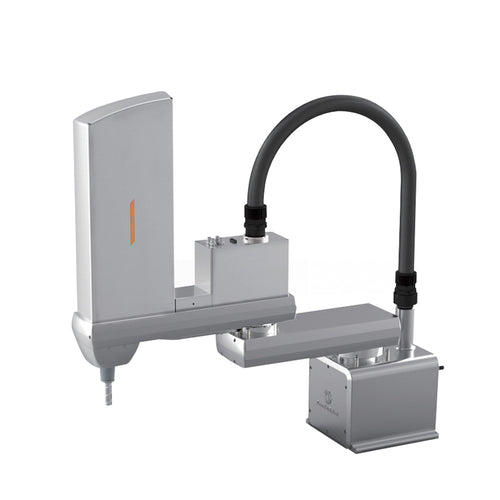
Selective Compliance Assembly Robot Arms, or SCARA robots, are 4-axis robots that are flexible horizontally along the X and Y planes and rigid vertically along the Z plane. They are designed for high-speed, pick-and-place operations where accurate material placement is necessary.
SCARA dispensing robots are commonly used in:
- Electronics assembly
- Medical device manufacturing
- Product assembly
- Precision dot dispensing
Browse our collection of SCARA robots for dispensing.

Collaborative Robots
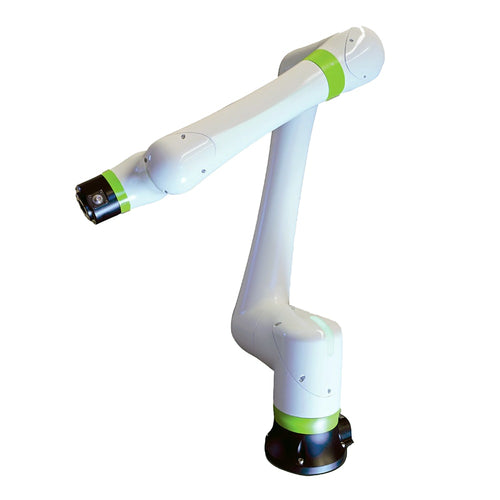
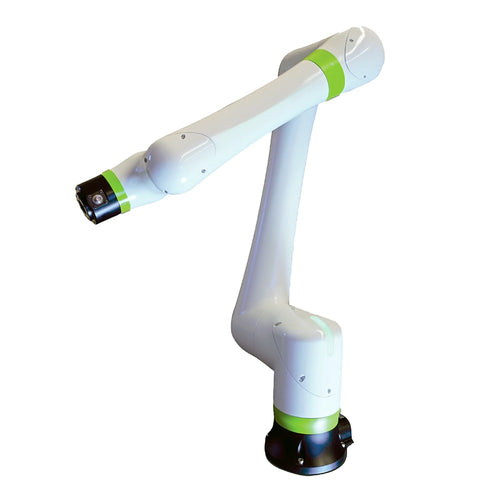
Collaborative robots, often just called cobots, are robots with built-in safety features and learning capabilities so they can work alongside humans. They use sensors to detect nearby operators and automatically stop or slow movement as needed. Cobot dispensing systems offer easy integration and deployment, so they are often ideal for manufacturers new to automation. Cobot dispensing robots can be used for gluing, sealing, painting, and other dispensing applications.
They are commonly used in:
- Car manufacturing
- Product assembly
- Electronic device manufacturing
- Medical device manufacturing
Browse our collection of collaborative robot dispensing systems.
Industrial Robots
Industrial dispensing robots tend to be bulky and powerful machines often used for high-volume or high-speed dispensing applications, as well as heavy loads or dangerous materials. Because these robots tend to operate with great force and speed, they typically require added safety measures like fencing or physical barriers to protect workers. Consequently, these systems often require significant floor space and may offer less adaptability for changing production layouts or flexible manufacturing environments.
Industrial dispensing robots are commonly used in:
- Automotive manufacturing
- EV battery assembly
- Structural bonding
- Large-scale industrial production
How to Choose a Robotic Dispensing System
While some robotic dispensing systems are designed for precision and can fit on a benchtop, others are made for high-volume applications and take up more space. When the dispensing system is not properly matched to the application requirements, it can lead to serious issues that can cost manufacturers wasted time, money, or space.
To help you select a robot adhesive dispensing system that is right for your needs, our team is sharing the key factors to consider before you decide.
Material Compatibility and Characteristics
A big consideration when choosing robotic dispensing equipment is the material being dispensed. Different materials are compatible with different pieces of dispensing equipment.
Two-component materials require different systems than single-component materials. Thick pastes or filled materials also behave differently than low-viscosity adhesives and can be more challenging to dispense. It is imperative to always verify and test compatibility between the materials and the system to ensure efficient and accurate dispensing.
Dispensing Application
Different applications require very different dispensing systems and setups. What are the motion requirements? How critical is precision to your applications? What is the dispensing pattern? Is it complex? The answers to all these questions can help you narrow down your choices to a robotic dispensing system that is compatible with your real-world application requirements.
Production Demands
Another major factor to consider when picking a robotic dispensing system is how it will fit into your production process. The right choice will match your production needs without creating bottlenecks.
You should consider all the following:
- Throughput and production volume
- Cycle times
- Cure and open times
- Shift schedules
- Floor space/workspace constraints
Some robotic dispensing equipment is better suited for higher production volumes or shorter cycle times. At the same time, these pieces of equipment tend to require more floor space to accommodate them. You need to find the right balance that is best for your production needs.
Integration Requirements
Choosing the right adhesive robot requires more than simply selecting a robot platform. Modern dispensing systems often need to be properly integrated with existing equipment and software. Well-integrated systems can improve production efficiency and simplify troubleshooting.
Integration considerations may include:
- PLC communication
- Conveyor synchronization
- Vision inspection
- Data logging
- MES connectivity
- Safety guarding
- Robot communication protocols
Learn more about our dispensing equipment integration services.
Maintenance and Serviceability
Maintenance and serviceability requirements can vary significantly between dispensing systems. Some complex systems require more involved maintenance and can be more costly to repair when something goes wrong.
Before purchasing robotic dispensing equipment, ask yourself the following questions:
- What are the maintenance requirements, and how often do you need to perform maintenance?
- What components wear most frequently, and what spare parts should you keep on hand?
- Does your team have the expertise to perform these tasks, or will you need to seek outside support?
- How quickly can you get technical support?
- What type of operator training is needed?
- How readily available are replacement parts?
Total Cost of Ownership
It is imperative to look at the total cost of ownership for a robotic system instead of the purchase price alone. Because these systems often require a significant upfront investment, manufacturers sometimes overlook the broader long-term financial impact. Before choosing a robot adhesive dispensing system, it is important to evaluate the full operational costs and the return on investment.
Key cost considerations include:
- Adhesive waste reduction
- Scrap reduction
- Labor savings
- Maintenance costs
- Downtime risk
- Energy usage
- Spare parts availability
- Operator training
Future Goals
A successful robotic dispensing system selection should support both your current production needs as well as your future growth plans. Do you need adaptability in your system, or will your application remain the same? Are you going to continue to grow in scale, or will this equipment be a good fit for the foreseeable future? When you look beyond your immediate needs, you can choose a robotic adhesive dispenser that can meet your business's long-term needs and save money.
Need More Help?
Choosing the right robotic adhesive dispensing system can improve repeatability, strengthen process control, and deliver a better return on investment. Because the selection process is so involved and requires careful evaluation for long-term success, our team can help guide you through the decision-making process.
We not only have a selection of robotic dispensing systems for you to explore, but our team can also answer your questions or provide system recommendations. Contact our team to get started.