
Table of Contents:
- Robot Vision Systems in Material Dispensing
- Benefits of Vision Systems
- 2D vs. 3D Robot Vision Systems
- 2D Systems
- 3D Systems
In manufacturing, even one missing adhesive bead can mean big problems. Rework, scrap, or warranty claims can cost businesses a hefty amount of time and money. To mitigate these issues, more and more manufacturers are investing in robot vision systems for their dispensing applications.
What Are Robot Vision Systems?
A robot vision system, in its most general sense, is a piece of equipment that gives robots "eyes." Robot vision systems use cameras or sensors to identify and inspect certain aspects of the manufacturing process. There are both 2D and 3D camera robot vision systems. In some cases, these systems can also be integrated with software that will initiate specific actions or correct errors made in real time.
Robot vision systems can be used in a wide range of applications, including product sorting, product assembly, welding, depalletizing, measuring materials, and material dispensing.
Robot Vision Systems in Material Dispensing
For our purposes, we are going to focus on robot vision systems for dispensing applications. Robot vision systems for dispensing use their cameras or sensors to inspect the adhesive or sealant dispensed onto a product or part. They are often attached directly onto the dispensing equipment, like around the nozzle, and use lasers or cameras to monitor the material that is dispensed in automated or semi-automated production lines.

These systems can be used to confirm dispensing of the adhesive or correct placement (2D systems) as well as more advanced metrics like adhesive volume, bead length, or bead continuity (3D systems). They can track when the adhesive is not within the desired specifications and may trigger a corrective action when connected to software.
In many cases, dispensing robot vision systems are seen as an "add-on" to automated dispensing systems. While they are not necessary for every manufacturer, they do provide a lot of value to businesses. They tend to provide the most value for applications where:
-
Adhesive application must be precise and accurate for performance
-
Traceability is needed for compliance or warranty claims
-
Production includes fully automated and unattended lines
-
Scrap and rework costs are substantial
These types of applications may be found in vehicle manufacturing, residential and commercial windows, consumer electronics, medical devices, foam-in-place gasketing, and even aerospace manufacturing.
Benefits of Robot Vision Systems for Dispensing
So, if it is not necessary for your production, why would you need one? Without a vision system for your dispensing system, numerous problems could arise. An adhesive bead could be placed in the wrong spot. The material could run out without anyone knowing. Too little of the material could be applied or too much of the material could be applied.
All these issues could lead to major problems down the road, and the worst part is, they often won't be discovered until it's too late. An entire run of product could be defective. A robot vision system could catch these problems sooner rather than later so they can be fixed immediately.
There are several benefits of dispensing robot vision systems, including:
-
Traceability to protect against warranty claim and meet compliance regulations
-
Fast defect detection versus once the product already ships or is far down the production line
-
Decreased scrap and rework to reduce wasted money and time
-
Quality control, especially for regulated applications
In the end, robot vision dispensing systems are not just a bonus feature; they are a risk reduction tool that can lead to a huge ROI for manufacturers.
2D Vs. 3D Robot Vision Systems for Dispensing: What Manufacturers Need to Know
Now that you know more about automated dispensing robot vision systems, it is important to choose the right one for your needs. Some players in this space include Atlas Copco, Pepperl+Fuchs, Cognex, KEYENCE, and Coherix. These companies offer a wide range of different systems, but one of the biggest factors to consider is whether you need a 2D or 3D robot vision system for your dispensing needs.
2D Robot Vision Systems for Dispensing
Many of these manufacturers offer 2D robot vision systems for dispensing, including Cognex and KEYENCE. These 2D vision systems will inspect the bead after it is dispensed onto the part either with a camera or lasers. This inspection can confirm that the adhesive was actually dispensed and that it was placed in the correct area. Beyond this, the capabilities are limited.
2D robot vision systems for dispensing are generally focused more on inspection and not on process control, so they do not give the system the opportunity to go back and fix mistakes right away. Consequently, issues and defects can still slip through production and lead to unnecessary scrap or rework. There can also be some challenges around using 2D dispensing robot vision systems including with lighting, material color, part color, and user experience. If you are only looking for the most basic robot vision system to confirm the placement of the adhesive bead, then a 2D robot vision system for dispensing may suffice.
3D Robot Vision Systems for Dispensing
A 3D dispensing robot vision system is able to offer the same capabilities of a 2D vision dispensing system but also has more advanced features. Compared to 2D bead inspection, 3D bead inspection also includes looking at adhesive volume, bead length, and bead continuity. These additional metrics can ensure better precision and accuracy in dispensing.
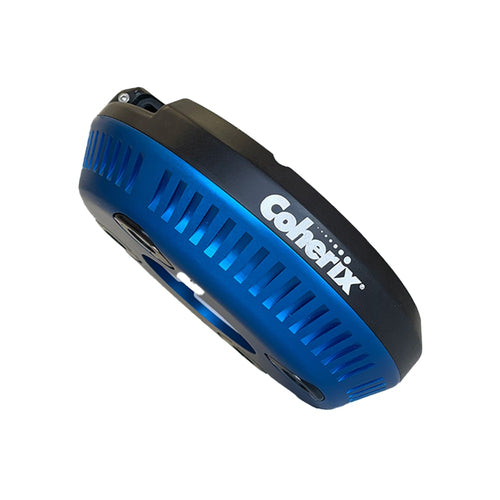
3D robot vision systems for dispensing are also sometimes integrated with software to allow for adaptive process control. Coherix is one such company that offers a real-time adaptive process control with Z-height tracking, lateral tracking, and dynamic volume adjustment to ensure beads stay accurate despite part or process variation. Coherix's robot vision system for dispensing uses a 3D laser that is reading 400 times a second to measure the volume and integrity of the bead. Any mistakes are caught immediately, and corrective action can be taken right away to fix them.
Want to Learn More?
With over 50 years of adhesive dispensing knowledge, we want to help you optimize your material dispensing processes and get the highest ROI. If you want to learn more about robot vision systems for dispensing in general, you can speak with one of our dispensing experts.
We also offer services to help you integrate robot vision systems or automated dispensing systems into your existing production processes. Learn more about our automation integration services.