
Table of Contents
- DOWSIL™ 375 Review
- SikaForce® -735 GG Review
- DOWSIL 375 Vs. SikaForce-735 GG
- How to Choose
- Application and Dispensing
- FAQs
The embedding of monolithic or laminated glass panes in U-shaped support channels for glass railings, guard rails, and balconies involves the use of materials to support the glass and distribute the load. Choosing the right material is critical for controlling panel movement, supporting the intended loads, and achieving a clean appearance.
Two commonly used products for glass embedding are DOWSIL 375 and SikaForce-735 GG. While both are viable options for many of the same uses, they have slightly different specifications that can make one a better fit than the other depending on the particular application. To help you determine the right material for your needs, we are taking a closer look at both products and comparing them side by side.
DOWSIL™ 375 Review
DOWSIL 375 is a two-part polyurethane designed for the embedding of glass panels in U-shaped profiles for glass balustrades. It cures to a very rigid supporting material that helps minimize panel deflection under load. The DOWSIL 375 glass embedding polyurethane also has a very fast cure time at room temperature and excellent flowability for efficient assembly. It can be used in both indoor and outdoor applications.
Additional product specifications for the DOWSIL 375 polyurethane are outlined below.
| Property | Specification |
|---|---|
| Mixed Viscosity (ASTM D4878) | 5,000 mPa·s |
| Tensile Strength (ISO 527) | 2,465 psi (17 MPa) |
| Elongation at Break | 11% |
| Cure Time (at 68°F /20°C) | 7 hours |
| Shore D Hardness (ISO 868) | 70 |
| Pot Life (DOWM3 10159) | 60 minutes |
SikaForce® -735 GG Review
SikaForce-735 GG is a two-part, pu-grout made for glass panel embedding applications that creates homogeneous load distribution. Its self-leveling formulation makes it pourable and easy to use. It can be applied in indoor and outdoor applications, but requires a weather seal material for lasting outdoor use. The SikaForce-735 GG polyurethane is also solvent-free.
A few key product specifications for the SikaForce-735 GG glass embedding material are outlined below.
| Property | Specification |
|---|---|
| Mixed Density | 12.5 lb/gal (1.5 g/cm³) |
| Mixed Viscosity (Brookfield - RVT 6/20) | 5,200 mPa·s |
| Tensile Strength (ISO 527-2) | 550 psi (3.8 MPa) |
| Elongation at Break (ISO 527-2) | 20% |
| Shore D Hardness (ISO 48-4) | 60 |
| Application Temperature | 59–86°F (15–30°C) |
| Solid Content | 100% |
DOWSIL 375 Vs. SikaForce-735 GG Comparison
While both materials are designed for glass panel embedding applications, there are some notable differences that can impact which product you should use. Our team outlines some of the key similarities and differences between DOWSIL 375 and SikaForce-735 GG to help you determine which product is right for your needs.
| Property | DOWSIL 375 | SikaForce-735 GG |
|---|---|---|
| Chemistry | Two-part polyurethane | Two-part polymer grout based on polyurethane resin |
| Color When Mixed | Cream | Beige |
| Mixing Ratio By Volume | 100:25 | 100:25 |
| Mixed Viscosity* | 5,000 mPa·s (ASTM D4878) | 5,200 mPa·s (Brookfield RVT 6/20) |
| Tensile Strength (ISO 527) | 2,465 psi (17 MPa) | 550 psi (3.8 MPa) |
| Elongation at Break (ISO 527) | 11% | 20% |
| Shelf Life | ≈12 months | ≈12 months for Part A and 9 months for Part B |
| Pot Life* | 60 minutes (DOWM3 10159) |
25 minutes (CQP536-3) |
*This information is pulled from the manufacturers’ data sheets. In some cases, the manufacturers used different testing methods, so the numbers are not directly comparable.
Both the DOWSIL 375 and SikaForce-735 GG glass embedding materials are similar in their chemistries, mix ratios, colors, and shelf lives. Consequently, it is no surprise that these two materials can have overlapping applications.
Notable differences between the DOWSIL 375 polyurethane and the SikaForce-735 GG polyurethane are their tensile strength and flexibility. DOWSIL 375 has a substantially higher reported tensile strength and forms rigid bonds. On the other hand, SikaForce-735 GG pu-grout has a lower tensile strength but offers greater elongation at break.
How to Choose
When choosing a glass panel embedding material, it is important to look at the whole picture and evaluate your application. DOWSIL 375 may be better suited for applications that prioritize higher tensile strength, while SikaForce-735 GG may be preferable when greater elongation is needed.
That being said, manufacturers should consider substrate compatibility, end use requirements, application design, service conditions, production processes, and installation. Regardless of which material you choose, application testing is recommended to evaluate final performance.
Application and Dispensing
It is not just important to choose the right material; you also need to apply it properly to get effective results. Surface preparation is critical. Cleaning the substrates is typically recommended, and careful placement of the material is needed. For outdoor installations, the embedding material must be protected with a weather-seal system. Sika requires a Sikasil WS sealant bead, while Dow directs installers to use DOWSIL 791 Weatherproofing Sealant. Follow the applicable manufacturer’s surface-preparation and application instructions for the best results.
Since both DOWSIL 375 and SikaForce-735 GG are two-component materials, they require mixing before application. The components must be mixed thoroughly at the specified ratio to prevent improper curing, inconsistent mechanical properties, and inadequate support within the channel.
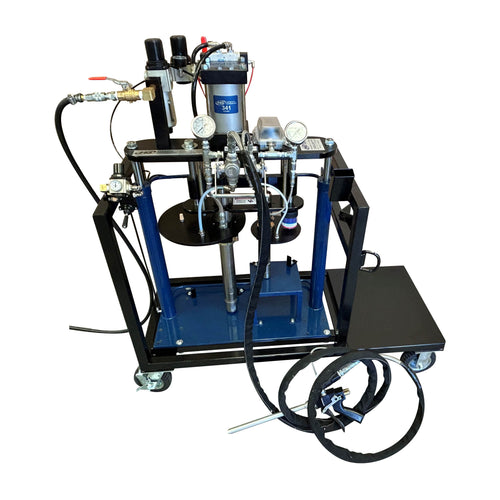
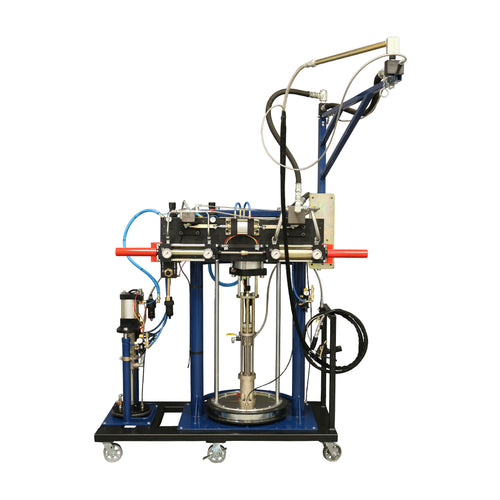
While mixing can be done by hand, bulk dispensing equipment can minimize the risk of inaccurate ratios or inconsistent mixing. The HG 341 polyurethane dispensing system, for instance, is a portable machine that provides precise metering and mixing for on-ratio dispensing of either of these materials.
Have Questions?
Both materials can be a good choice for glass embedding, but it will just depend on the application. If you have questions about the dispensing and application of DOWSIL 375 or SikaForce-735 GG, we want to help. Our dispensing experts can help you find the right equipment for your needs. Contact us to connect.
Dispensing.com is not affiliated with DOWSIL™. DOWSIL™ is a trademark of The Dow Chemical Company or an affiliated company.