

Guest Post by Josh Anton
Josh Anton is the Marketing Communications Manager for Coherix. Coherix is a US-based company that creates 3D adaptive process control systems and real-time adhesive bead inspection for sealants, adhesives, and other material dispensing.
Anton has been with Coherix since 2020 and oversees all aspects of marketing and communications, including website strategy, trade shows, and brand messaging.
Why Volume and Location Are Necessary When Inspecting Adhesives and Sealants
In today’s world, adhesive and sealant dispensing is no longer just a small part of the manufacturing process; it is a critical quality control point that can directly impact product performance, safety, and costs. Unfortunately, many manufacturers still struggle with inaccurate beads or dispensing. To ensure precision and accuracy, you need to be cognizant of the adhesive bead volume and location.
The Risks of Incorrect Volume and Location of an Adhesive Bead
At a glance, an adhesive bead may appear acceptable. It may look to be in the correct place and seem to be the appropriate size, but in reality, even small deviations can lead to major downstream issues.
- Too little material can lead to weak bonds, leaks, or even structural failure
- Too much material can lead to waste, squeeze-out, and cleanup costs
- Incorrect adhesive bead placement compromises sealing and performance
These small issues can also add up. Even a single misplaced adhesive bead or inaccurate volume can result in defective products, rework, or warranty claims.
Why Volume of an Adhesive Bead Matters
Adhesive bead volume refers to the bead diameter and length. The correct bead volume varies by application, but insufficient or excessive adhesive bead volume can both cause problems.
In applications like automotive assembly, electronics manufacturing, or EV battery production, insufficient adhesive volume can lead to:
- Weak bonds
- Gaps or voids in the seal
- Reduced structural integrity
- Increased risk of failure over time
Excessive adhesive bead volume also creates inefficiencies, including:
- Material waste
- Increased cycle time
- Additional cleaning requirements
The reality is, you need to apply exactly the right amount of material — no more, no less. Any other amount can be costly.
Why the Location of an Adhesive Bead Matters
Adhesive bead location is the exact placement of the adhesive on the substrate. Even with the correct bead volume, a bead applied in the wrong location is still a defect. Adhesives and sealants must be placed precisely along engineered paths.
Incorrect adhesive bead placement can lead to:
- Improperly covered sealing surfaces
- Poor structural integrity
- Leaks or environmental exposure
Especially in EV battery sealing or energy storage applications, even slight misalignment of the adhesive bead location can compromise overall safety and durability.
Inspecting Adhesive Bead Location & Volume
Many manufacturers rely on 2D vision systems or even manual inspections to assess the adhesive bead. In many ways, these methods fall short. Manual inspections are not precise, and 2D systems simply don’t capture the full reality of a 3D adhesive bead.
These methods can only confirm the presence or absence of the adhesive bead. They do not inspect bead quality and cannot accurately measure adhesive bead volume. Inspection happens after defects occur, resulting in downstream issues.

Because these methods are limited, modern manufacturing demands real-time, 3D robot vision systems that measure both bead volume and location.
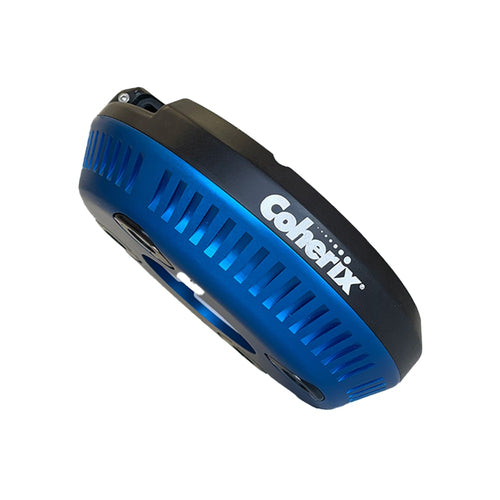
Coherix 3D inspection systems, for example, can:
- Measure bead height, width, volume, and position
- Compare results directly to engineering specifications
- Operate at full production speed
- Provide complete process visibility and traceability
These systems can ensure manufacturers verify not just that material was applied, but that it was applied correctly.
From Inspection to Prevention
While 3D inspection can alert you to issues, what happens when the adhesive bead volume or location is wrong? The real breakthrough comes with Adaptive Process Control (APC). Coherix integrates its 3D inspection tools with adaptive process control systems to automatically correct errors in the dispensing process detected from the inspection data.
With this real-time control, manufacturers can:
- Detect errors immediately
- Correct errors before the product is too far downstream
- Reduce scrap and rework
- Decrease the amount of wasted material
- Improve dispensing consistency
- Make adjustments as needed
Final Thoughts
Adhesive and sealant dispensing may seem simple, but in reality, it is a complex process in manufacturing. Success doesn’t come from simply applying material. It relies on the accuracy and precision of the adhesive bead volume and location.