
Table of Contents
- The Different Types of Adhesive Dispensing Equipment
- Comparison of Different Systems
- How to Choose the Right Type of Equipment
- FAQs
Your adhesive dispensing equipment can have a direct impact on material performance, production efficiency, and the quality of your final product or project. Whether you work in manufacturing, construction, or product assembly, how the material is dispensed and applied matters just as much as the material itself. The right adhesive and fluid dispensing equipment can optimize your production, while the wrong system may even hurt your business.
In this guide, we break down the main types of adhesive dispensing equipment from handheld tools to fully automated systems. We also outline how to evaluate each option so you can make an informed decision when choosing dispensing equipment for your application.
The Different Types of Adhesive Dispensing Equipment
Adhesive dispensing equipment can be categorized by the type of material being dispensed, the required volume, the level of automation, the application method, and more. While there can be overlap between categories, different types of dispensing equipment tend to serve different purposes and applications. Understanding the differences between these categories of adhesive dispensing equipment can help you match the right equipment to your needs.
Some common types of adhesive and fluid dispensing equipment include:
- Hot Glue Guns
- Cartridge Guns
- Bulk Hot Melt Systems
- Syringe Dispensing Systems
- Meter Mix Dispensing Systems
- Supply Pumps
- Robotic Dispensing Systems
Hot Glue Guns
Hot glue guns are a handheld tool designed for the dispensing of hot melt adhesives in the form of sticks or slugs. They are typically viewed as simple dispensing tools, but options range from basic craft glue guns to pneumatic and bulk hot melt glue guns designed for higher volume applications.
Hot glue guns are often best for low- to moderate-volume applications where portability and flexibility are more important than precision and speed. They are commonly used in packaging, light assembly, and quick repairs.
Pros:
- Easy to use with minimal setup or training needed
- Lower initial cost
- Highly portable
Cons:
- Limited precision
- Limited to hot melt adhesives
- Not suitable for high-volume production
- Operator consistency can vary
Explore the different types of hot glue guns.
Cartridge Guns
Cartridge guns are another handheld tool similar to a caulking gun that dispenses and applies adhesives packaged in cartridges. They are designed for use with one-part or two-part adhesives, depending on the specific cartridge gun. There are also manual and pneumatic options to suit different application needs.
Cartridge guns are best for low-volume applications or fieldwork and are commonly used in construction, sealing, and repair applications.
Pros:
- Simple, reliable, and easy to operate
- Good for fieldwork and jobsites
- Minimal cleanup required
- Compatible with numerous adhesive chemistries
Cons:
- Limited control and precision compared to automated systems
- Frequent cartridge changes required
- Not ideal for continuous or high-volume production
Explore our selection of one-component cartridge guns and two-component cartridge guns.
Bulk Hot Melt Systems
Bulk hot melt systems are designed to dispense bulk forms of hot melt adhesive, such as pellets, pillows, and slats. They are made for higher volume applications than glue guns and are commonly used in packaging and manufacturing environments.
Pros:
- Good for higher volume or continuous operation
- Reduced material handling
- Consistent application
Cons:
- Higher upfront cost
- Requires maintenance and setup
- Less portable than handheld tools
- Limited to hot melt adhesives
Find a wide selection of bulk hot melt tanks.
Syringe Dispensing Systems
Syringe and cartridge systems are a type of fluid dispensing equipment widely used for precise application of small amounts of adhesive. They allow you to dispense controlled amounts of material with better precision than manual application methods. They are especially useful for electronics, small assemblies, and applications where clean, repeatable beads or dots are required.
Pros:
- Improved accuracy over manual dispensing
- Easy material changeover
- Compatible with a wide range of adhesives
Cons:
- Limited capacity compared to bulk systems
- May require frequent refilling
- Less efficient for high-volume work
See our selection of adhesive and fluid dispensing syringes.
Meter Mix Dispensing Systems
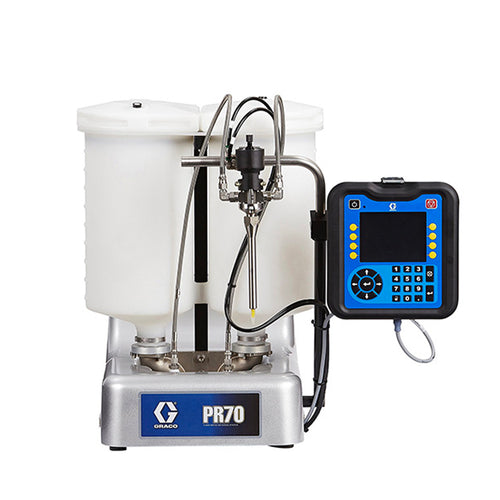
Meter mix dispensing systems are used for the accurate and on-ratio dispensing of two-component materials such as epoxies, silicones, and polyurethanes. These systems measure, mix, and dispense the material for accurate and repeatable results. Meter mix equipment can range from benchtop systems to large-scale, fully automated systems and are commonly used in applications requiring consistent ratios and higher throughput
Meter mix systems are critical in structural bonding applications where improper mixing could lead to bond failure. They are commonly used in construction and industrial applications.
Pros:
- Accurate, on-ratio dispensing
- Consistent and repeatable material performance
- Suitable for structural and high-performance applications
Cons:
- More complex setup and training are involved
- Higher initial investment than handheld systems
- Requires more cleaning and maintenance
Browse our wide selection of meter mix dispense equipment, including benchtop, portable, and high-volume options.
Supply Pumps
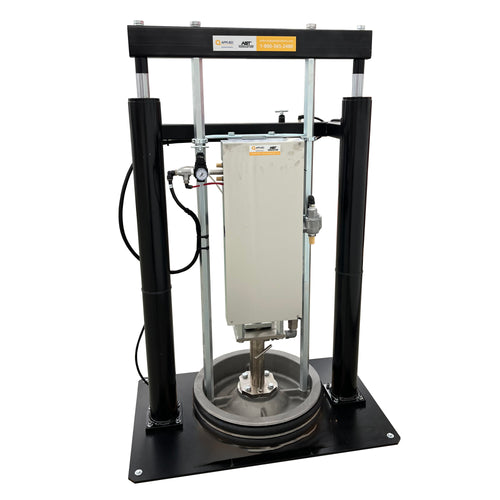
Supply pumps are a type of fluid dispensing system designed for bulk adhesive handling. These systems pull or push material directly from bulk containers like pails, drums, or totes and feed it into dispensing equipment. This type of adhesive dispensing equipment is ideal for high-volume operations where manufacturers are handling large quantities of material and want to reduce their downtime.
Pros:
- Handles high-viscosity and bulk materials
- Reduces refill frequency
- Improves efficiency in production environments
Cons:
- Higher initial investment
- Requires proper setup and maintenance
- Less practical for small-scale work
Explore our collection of adhesive pumps.
Robotic Dispensing Systems
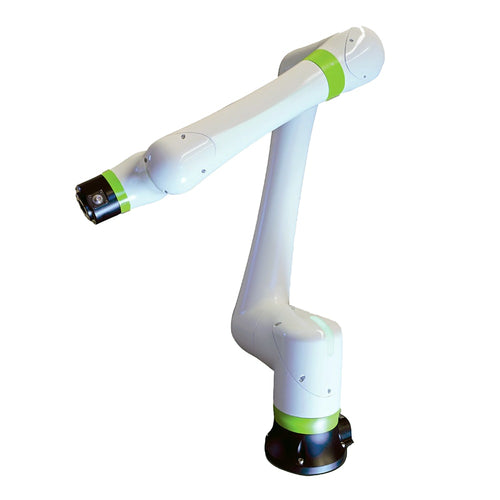
Robotic dispensing systems use robots to dispense and apply adhesives in an automated fashion. These adhesive dispensing systems are known for their high precision and repeatability.
Common types of robotic dispensing systems include SCARA robots, Cartesian robots, collaborative robots, and industrial robots. They can range from small benchtop equipment to large-scale systems and can be programmed for different methods of adhesive dispensing, including dots, beads, or complex patterns. Robotic systems are often ideal for manufacturers looking for repeatable dispensing or wanting to scale their production.
Pros:
- High repeatability and precision
- Increased production speed
- Reduced manual labor
- Can dispense complex patterns depending on the type of robot
Cons:
- Higher upfront investment
- Requires programming and integration
- Less flexible for small or changing jobs
We offer a diverse collection of robotic adhesive dispensing systems as well as dispensing system integration.
Comparison of Different Adhesive Dispensing Systems
Different types of adhesive equipment align best with different types of materials and applications. To help you compare and narrow down your options, we created the table below.
|
Equipment Category |
Material Type |
Automation |
Key Advantage |
Ideal Uses |
|
Hot Glue Guns |
Hot melt adhesives |
Manual |
Fast application and ease of use |
Packaging, product assembly, and light manufacturing |
|
Cartridge Guns |
One- and two-part adhesives in cartridges |
Manual |
Simple dispensing with minimal setup |
Construction, sealing, and repair work |
|
Bulk Hot Melt Systems |
Hot melt in bulk forms |
Semi-automated to fully automated |
Continuous operation and reduced reloads |
High-volume packaging and manufacturing |
|
Syringe Dispensing Systems |
Small amounts of materials |
Manual to semi-automated |
High accuracy for small deposits |
Electronics, medical devices, precision assembly |
|
Single-Component Fluid Dispensing Systems |
One-part adhesives and materials |
Manual to semi-automated |
Consistent flow and process control |
General manufacturing, gasketing, and bonding |
|
Meter Mix Dispensing Systems |
Two-part adhesives and materials |
Semi-automated to fully automated |
Precise ratio control and mixing |
Structural bonding, automotive, aerospace applications |
|
Supply Pumps |
Bulk adhesives from pails, drums, and totes |
Semi-automated to fully automated |
Reduced downtime and efficient material handling |
High-volume production, continuous feed applications |
|
Dispensing Robots |
Any compatible material |
Fully automated |
High precision and repeatability |
Automated production lines |
How to Choose the Right Type of Dispensing Equipment
Selecting the right type of dispensing system is an involved decision with a lot of considerations. It requires evaluating your material, application, and production needs. To help you make an informed decision, our team is sharing a step-by-step guide to choosing your adhesive dispensing equipment.
1. Review your material parameters. You should look at the adhesive chemistry, viscosity, and whether or not it is a single-component or two-component material. These parameters can narrow down your options significantly.
2. Define your production volume. Low-volume work may only require handheld tools or smaller benchtop systems. On the other hand, high-volume or continuous production typically demands semi-automated or automated systems.
3. Determine the required precision. If your application requires tight tolerances, consider syringe systems, valves, or robotic dispensing. For general sealing or filling, simpler systems or handheld equipment may be sufficient.
4. Consider the material packaging. Adhesives supplied in cartridges, syringes, pails, or drums will influence which equipment is most efficient.
5. Assess your workspace and mobility needs. Handheld equipment or portable systems work better for field applications, while fixed or robotic systems tend to be better suited for controlled production environments.
6. Plan for your future. If you expect growth, investing in modular or automated systems can reduce long-term costs and make scaling easier.
By following these steps, you can avoid common pitfalls such as choosing equipment that hinders your production volume or overinvesting in systems that exceed your actual needs. It is important to note that some manufacturers use more than one kind of adhesive dispensing equipment to optimize their production process.
Looking for a Specific Recommendation?
Adhesive dispensing can be complex. Not only are there numerous types of adhesive dispensing equipment available, but also every piece of equipment is slightly different. Even if you do narrow it down to a particular type of dispensing equipment, you may not know where to go from there.
With over 50 years in the dispensing industry, we can provide you with dispensing equipment recommendations tailored to your unique needs. From handheld tools to fully automated systems, we can help you select the right adhesive dispensing equipment to optimize your manufacturing process. Contact our team to get connected to an expert.