
Table of Contents
- SIMIRON 1100SL Product Overview
- SIMIRON 1150FC Product Overview
- Side-by-Side Comparison
- Ideal Uses
- How to Choose
- Installation and Dispensing
- FAQs
Choosing the right epoxy floor coating and applying it correctly can not only impact the state of the finished product but can also affect your crew’s productivity, scheduling, and profitability. When you select a system that aligns with your job-site conditions and application requirements, you reduce downtime, avoid rework, and keep projects moving efficiently.
With so many floor coating materials available, each with different specifications, cure profiles, and installation demands, it is critical to evaluate your options carefully. Two popular materials for concrete environments are SIMIRON 1100SL epoxy and SIMIRON 1150FC epoxy. Both products serve the same basic purpose but are engineered slightly differently. Our team compares SIMIRON 1100SL and SIMIRON 1150FC epoxy floor coatings to help you decide which material aligns with your priorities.
SIMIRON 1100SL Product Overview
SIMIRON 1100SL is a self-leveling, 100% solids epoxy designed as a basecoat for use over properly prepared concrete substrates. The material has good chemical resistance and toughness, so it is great for applications where high-build and durability are needed. It is also solvent-free and safe for incidental food contact.
The SIMIRON 1100SL self-leveling epoxy is conveniently available in slow, standard, and fast cure options for more flexibility in your application process. It can be combined with decorative chips, quartz, or metallic additives to create an attractive, high-gloss finished floor surface. Common uses of the SIMIRON 1100SL epoxy floor coating include restaurants, showroom floors, garages, airport hangars, schools, and sports arenas.
Some key characteristics of the SIMIRON 1100SL epoxy adhesive include:
- 2:1 mix ratio by volume
- 100% solids by volume and weight
- Zero VOC formulation
- Self-leveling performance
- Varying cure speed options
- Impact, abrasion, and chemical resistance
- Seamless
- High compressive, tensile, and flexural strength
SIMIRON 1150FC Product Overview
The SIMIRON 1150FC is a 100% solids, two-component epoxy engineered specifically for fast cure performance and cold-weather application in temperatures as low as 32°F. It also has excellent blush resistance, chemical resistance, and impact resistance. When combined with decorative chips, U-TINT, or quartz, the final product is a seamless and durable epoxy floor.
The SIMIRON 1150FC epoxy adhesive is ideal for heavy-duty applications where quick return to service is necessary. Recommended uses for the material include warehouses, manufacturing facilities, industrial plants, automotive service areas, shop floors, garages, laboratories, and clean rooms.
Some key characteristics of SIMIRON 1150FC floor coating include:
- 2:1 mix ratio by volume
- 100% solids by volume and weight
- Zero VOC formulation
- Fast cure performance
- Application range from 32°F to 85°F
- Solvent-free
- Moisture vapor transmission control up to 12 lbs per ASTM F1869
Side-by-Side Comparison of SIMIRON 1100SL and SIMIRON 1150FC
While both products are designed for epoxy floor coating, they differ in their strengths, limitations, and ideal use cases. Our team outlines some of the technical similarities and differences between the SIMIRON 1100SL and SIMIRON 1150FC epoxy adhesives.
| Property | SIMIRON 1100SL | SIMIRON 1150FC |
|---|---|---|
| Mix Ratio | 2:1 | 2:1 |
| Solids Content | 100% | 100% |
| Mixed Viscosity | 900–1000 cP | 2800 cP |
| VOC Content (EPA Method 24) | 0 g/L | 0 g/L |
| Cure Options | Slow, standard, fast | Fast cure only |
| Working Time | 12–40 minutes (at 72°F, 50% RH), depending on cure option | 10–15 minutes (at 73°F, 45% RH) |
| Compressive Strength (ASTM D695) | 11,600 psi | 10,600 psi |
| Tensile Strength (ASTM D638) | 9,600 psi | 9,200 psi |
| Hardness, Shore D (24 hours, ASTM D2240) | 75 | 75 |
| Application Temperature Range | Standard indoor ranges | 32°F to 85°F |
| Resistances | Impact, chemical | Impact, chemical, blush |
| Moisture Vapor Control | Not mentioned in the technical datasheet | Up to 12 lbs (ASTM F1869) |
| Finish | High gloss | High gloss |
Both the 1100SL and 1150FC epoxy adhesives have the same mix ratios, solids content, mixed viscosity, and VOC content, so choosing between the two comes down to examining their differences.
While both products provide industrial-grade structural performance suitable for heavy-duty flooring systems, SIMIRON 1100SL self-leveling epoxy offers slightly higher compressive and tensile strength. It also has a wide range of working times available because of its fast, slow, and standard cure speed formulations.
On the other hand, the 1150FC from SIMIRON only has a fast cure speed option but has the added benefits of being able to be applied at lower temperatures and having excellent blush resistance. The technical datasheet of the SIMIRON 1150FC fast cure epoxy also mentions a resistance to moisture vapor transmission up to 12 lbs. There is no mention of this property for SIMIRON 1100SL.
Ideal Uses
While the two materials are similar in a lot of ways and are recommended overall for use in epoxy floor coating applications, their strengths lead to slightly different ideal use cases.
The SIMIRON 1100SL epoxy floor coating may be best used for the following scenarios:
- Flexible cure scheduling
- Larger floor areas that require extended working time
- General application temperatures
- Decorative broadcast systems such as chip, quartz, or metallic floors
Because of its multiple cure speeds, 1100SL works well when you need scheduling flexibility. You can select a slower formula for larger pours or a faster option when turnaround time matters. This flexibility allows you to match pot life to crew size and layout complexity. In the end, you can reduce material waste and installation stress. For contractors managing multi-phase projects or detailed decorative work, this added control can make a measurable difference in efficiency.
Compared to the SIMIRON 1100SL floor coating, the SIMIRON 1150FC may be a better choice for the following scenarios:
- Cold-weather installations
- Facilities needing rapid return to service
- Floors with moderate moisture vapor concerns
- Blush resistance is a concern
If you are working in an unheated warehouse or a facility with strict reopening deadlines, 1150FC is designed with these constraints in mind. Its fast cure profile supports quicker foot traffic and reduced downtime. The ability to apply it in temperatures as low as 32°F also expands your installation window during colder months. If you are working in environments where moisture vapor or amine blush could impact performance, SIMIRON 1150FC also provides added confidence under those conditions.
How to Choose Between SIMIRON 1100SL and SIMIRON 1150FC Epoxy
Selecting the right epoxy system is not just about product preference. It is about aligning the material with your jobsite conditions, timeline, and system design. When you evaluate these factors in a structured way, you reduce risk and keep your installation running smoothly.
If you are unsure whether to choose SIMIRON 1100SL or SIMIRON 1150FC for your project, follow this step-by-step decision process:
-
Evaluate your jobsite temperature.
If surface or ambient temperatures may drop near 32°F, SIMIRON 1150FC is the safer choice. -
Determine your return-to-service timeline.
If you need foot traffic in as little as four to eight hours, SIMIRON 1150FC may support that schedule. If you have more flexibility, SIMIRON 1100SL epoxy offers adjustable cure speeds. -
Review moisture conditions.
If moisture vapor transmission is a concern, the SIMIRON 1150FC epoxy may align better with your specification. -
Consider crew size and layout complexity.
Larger pours benefit from the SIMIRON 1100SL slow or standard cure options because they provide longer working time. -
Define the final floor system.
For decorative broadcast systems where leveling and aesthetics matter, SIMIRON 1100SL is commonly used as a basecoat.
By walking through these five steps, you can narrow your decision logically rather than relying on guesswork.
Installation and Dispensing of SIMIRON 1100SL and 1150FC
Whether you choose the SIMIRON 1100SL or SIMIRON 1150FC epoxy floor coating material, proper surface preparation and application are key.
Recommended surface preparation for SIMIRON 1100SL epoxy and SIMIRON 1150FC epoxy includes applying the materials to concrete and coated concrete surfaces that are sound, clean, dry, and free of contaminants. Concrete should be mechanically profiled, typically via grinding or shot blasting. Both systems are designed for high-build application and can be used with squeegees and back-rolling techniques.
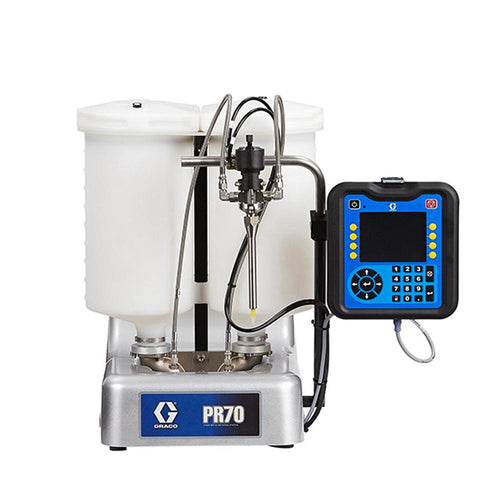
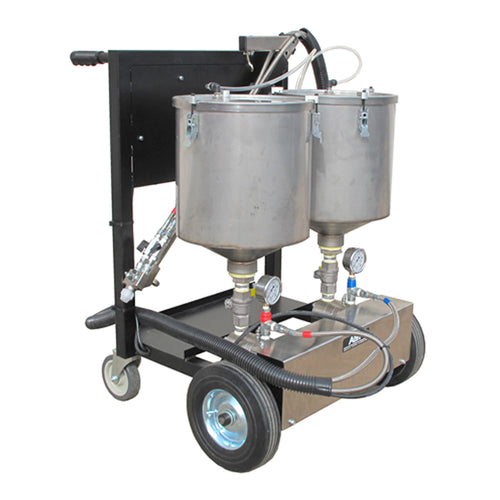
For best results in the application process, a bulk epoxy floor coating dispenser can be helpful. Rather than hand mixing and dumping batches of the material on the bonding area, these systems do the premixing for you and can ensure on-ratio and efficient dispensing of SIMIRON 1150FC and SIMIRON 1100SL. The result is significantly less wasted material and time, as well as no race against the clock before the epoxy cures.
Talk to the Experts
SIMIRON 1100SL and SIMIRON 1150FC both deliver great epoxy performance for concrete floors, but the best choice for you will depend on your specific use case and priorities.
If you have questions about the application and dispensing of SIMIRON 1100SL epoxy adhesive or SIMIRON 1150FC epoxy adhesive, we want to help. We offer a unique dispensing system that can drastically improve your accuracy and efficiency. Contact us to speak with one of our dispensing experts.
Dispensing.com is not affiliated with SIMIRON™. SIMIRON™ is a registered trademark of SIMIRON INC.