
Table of Contents
- Silicone Sealants
- Polyurethane Sealants
- Key Performance Comparison
- How to Choose
- Ideal Applications for Silicone Sealants
- Ideal Applications for Polyurethane Sealants
- Application & Dispensing
- FAQs
The long-term performance of a concrete joint depends largely on the sealant being used. The sealant needs to be able to accommodate movement, reduce stress, and help prevent cracking in the structure. To be most effective, the specifications of the sealant need to be compatible with the demands of the application and its environment. There are a lot of sealants to choose from, including those from top brands like 3M, Dow, H.B. Fuller, Sika, Pecora, Tremco, and more, so making the right choice can be tricky.
Two of the most popular types of sealants for concrete joints are silicone and polyurethane. Both materials are widely used, but they differ in their performance capabilities and, consequently, their ideal applications. To choose the right sealant for your job, you need to understand these differences. We compare silicone and polyurethane sealants for concrete joints, including the advantages, limitations, and ideal use cases for each.
Silicone Concrete Joint Sealants
Silicone sealants are elastomeric materials that are known for their high level of flexibility and great weatherproofing. They offer excellent resistance to temperature fluctuations, moisture, weather, and UV radiation. They are a popular choice for building exteriors and expansion joints that experience substantial movement.
Unlike polyurethane joint sealants, silicone sealants cannot be painted. Common silicone sealant joint sealing applications include building expansion joints, curtain walls, parking garages, tilt-up panels, stadiums, and bridges.
Pros
Some of the advantages of silicone joint sealants over polyurethane sealants are their:
- Weather resistance
- Temperature resistance
- Moisture resistance
- UV resistance
- Flexibility in extreme temperatures
- Movement capability
- Long service life in exterior applications
Cons
While silicone is a popular material for various joint sealing applications, it is not without its flaws. Some of the potential limitations of silicone joint sealers include:
- Poor abrasion and tear resistance
- Cannot be painted
- May leave a sticky or tacky surface
Polyurethane Concrete Joint Sealants
Polyurethane sealants are moisture-curing, elastomeric materials widely used in construction and industrial applications. They are known for their combination of durability, strength, and flexibility. Polyurethane joint sealers offer great vibration resistance and abrasion resistance for a long service life in heavily trafficked areas. Because of their durability, they are well-suited for dynamic joints and high-traffic construction applications.
Unlike silicone sealants, polyurethane sealants are paintable. Polyurethane sealants are also available in self-leveling and non-sag formulations, so contractors can match the product to horizontal or vertical applications. Common polyurethane sealant applications include sidewalk joints, pavement joints, parking structures, industrial floors, and commercial buildings.
Pros
Some of the advantages of polyurethane joint sealants over silicone sealants are their:
- Resistance to pedestrian and vehicular traffic
- Vibration resistance
- Durability
- Paintability
- Abrasion resistance
- Self-leveling formulations available for horizontal joints
Cons
While there are advantages to polyurethane sealants for concrete joints, they are not made for every application. Some of the limitations of polyurethane joint sealants include:
- Less resistance to extreme temperatures
- Less resistance to prolonged UV exposure
- Lower flexibility and movement capabilities
Key Performance Comparison Between Silicone & Polyurethane Joint Sealants
While both sealants are designed to seal moving joints, there are differences between the two in terms of their characteristics and capabilities. The table below highlights some of the key performance differences between silicone concrete joint sealants and polyurethane concrete joint sealants to help you choose based on your priorities.
| Property | Silicone Sealants | Polyurethane Sealants |
|---|---|---|
| UV Resistance | Excellent | Good |
| Weather Resistance | Excellent | Good |
| Movement Capability | Excellent | Good |
| Chemical Resistance | Excellent resistance to moisture and many chemicals | Excellent resistance to fuels, oils, and many industrial chemicals |
| Abrasion Resistance | Poor | Excellent |
| Traffic Resistance | Poor | Excellent |
| Service Life | Better for exterior applications | Better for protected, traffic-bearing applications |
| Paintability | Not usually paintable | Usually paintable |
It is important to note that there can be some overlap between categories, and the exact specifications vary by product. Always review a material’s technical datasheet for exact information.
How to Choose & Ideal Applications for Each Sealant
When comparing silicone and polyurethane concrete joint sealants, it is important to consider the following to find the right fit for your job.
- The expected joint movement and flexibility requirements
- The environmental conditions, including temperature, moisture, chemical, and UV exposure
- Traffic and abrasion requirements
- Whether the sealant needs to be painted
- Equipment and surface preparation requirements
- Remaining project specifications and manufacturer recommendations
After reviewing the full scope of the project and its requirements, you can make a more informed decision about the selection of your joint sealant and find a material that aligns with your needs.
Silicone Sealant Applications
Silicone is a great go-to material for many concrete joint sealing needs. Silicone joint sealants for concrete are often chosen for applications that require:
- Greater movement capability
- Strong UV resistance
- Long-term weather performance
- Extended service life in exterior applications
Because silicone remains flexible for extended periods, it is often the preferred solution for large expansion joints and exterior building envelope applications. Many modern construction specifications also favor silicone for critical exterior joints because of its long-term weathering performance and movement capabilities. Compared to polyurethane joint sealers, silicone joint sealers do not provide the same abrasion resistance as polyurethane, so they may not be ideal for heavily trafficked environments.
Silicone joint sealants are commonly used in building expansion joints, curtain wall joints, exterior facade joints, and high-movement concrete joints.
Polyurethane Sealant Applications
Polyurethane sealants are widely used in joint sealing because they provide a combination of strength, flexibility, and durability. Polyurethane concrete joint sealants are often chosen for applications that require:
- Traffic-bearing strength
- Long-term durability under heavy traffic
- Abrasion resistance
- Paintability
Compared to silicone joint sealers, polyurethanes are often preferred for industrial and traffic-bearing applications, but they are not as suited for environments with prolonged exposure to UV light or high amounts of joint movement. Polyurethane joint sealants are commonly used in industrial floors, warehouse joints, pavement and sidewalk joints, and parking structures.
While there is some overlap between the applications for each type of concrete joint sealant, the expected movement and exposure conditions often decide which material is the better choice.
Application & Dispensing

Regardless of the type of joint sealant you choose, the material is only as effective as its application. Proper surface preparation and dispensing are imperative for optimal results.
Recommended surface preparation can vary from one product to another, so it is important to review and follow the manufacturer's recommendations. Generally, cleaning and some form of mechanical abrasion, like sandblasting or grinding, are recommended. Cure time is another important factor to consider as premature return to service can cause issues with the finished product. Some materials recommend the use of a primer, so always consult a material’s technical datasheet for more details.
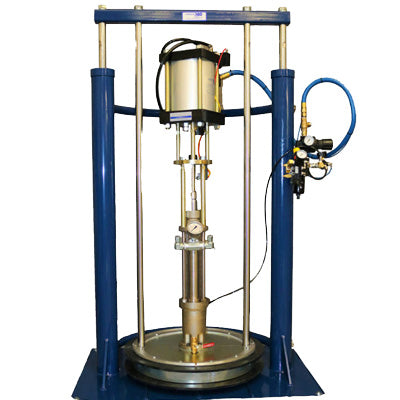
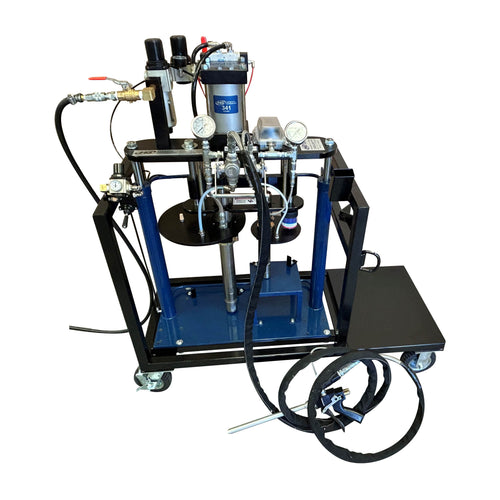
For larger job sites and projects, a bulk dispenser, like the SP 5 pail pump, can be helpful for increasing production as well as reducing wasted material. These systems are designed for consistent and accurate dispensing of materials in large quantities. Many are portable for on-site work and offer some level of configuration to meet your specific jobsite needs.
Looking for Help?
Both polyurethane and silicone sealants for concrete joints offer reliable and effective solutions, but the best choice ultimately comes down to your project requirements and goals.
If you have questions about the application and dispensing of silicone and polyurethane concrete joint sealants, reach out to our team. We have a diverse collection of concrete joint sealer machines and the expertise to help you determine which dispensing system is best for your needs.