
Table of Contents
- What Is Sikasil SG-500?
- SG-500 Product Specifications
- Best Practices for Application & Dispensing
- FAQs
Structural glass glazing systems rely heavily on the materials used to hold the systems together. Not only does the material need to be the right fit for the application, but also it must be dispensed and applied correctly for good long-term results.
Sikasil® SG-500 is a widely used structural silicone sealant for structural glazing applications. In this guide, we walk you through everything you need to know about Sikasil SG-500, including its properties, performance, and best practices for application and dispensing.
What Is Sikasil SG-500?
Sikasil SG-500 is a two-component, silicone structural glazing adhesive designed for bonding glass to metal framing systems in structural glazing applications. The material helps transfer loads from the glass to the frame while maintaining long-term flexibility and environmental resistance.
The Sikasil SG-500 adhesive is neutral-curing as well as UV- and weather-resistant for more demanding bond environments. It also has a good balance of tensile strength and elongation for dynamic structural loads. Overall, Sikasil SG-500 is engineered for structural applications where adhesion, durability, and movement capability are critical to performance.
SG-500 Product Specifications
Understanding the specific properties of the Sikasil SG-500 silicone can help you evaluate the product based on your application. Our team outlines some important product specifications for the Sikasil SG-500 structural glazing adhesive and how they relate to real-world requirements below.
| Property | Value | What It Means for Application |
|---|---|---|
| Chemistry | 2-part structural silicone | Requires meter/mix or controlled dispensing equipment |
| Density | 1.37 kg/l | Medium-high density requires properly calibrated pumps |
| Shore A Hardness (CQP023-1 / ISO 48-4) | 45 / 40 C | Provides a firm yet flexible joint that can support structural loads while still accommodating movement |
| Tensile Strength (CQP036-1 / ISO 527) | 1.9 MPa | Indicates sufficient strength for transferring wind and dead loads from glass to frame |
| Elongation at Break (CQP036-1 / ISO 527) | 250% | Allows significant stretch before failure, helping the joint absorb thermal expansion and dynamic movement |
| 100 % Modulus (CQP036-1 / ISO 527) | 1.1 MPa | Moderate stiffness ensures effective load transfer while still allowing controlled flexibility in the joint design |
| Tack-Free Time (CQP019-3) | 240 minutes (73.4°F / 50% r. h.) | Indicates when a surface skin begins to form (actual working and tooling time is shorter) |
| Application Temperature | ~41°F to 104°F (5°C to 40°C) | Suitable conditions for installation and curing |
| Service Temperature | ~-40°F to 302°F (-40°C to +150°C) | Ensures long-term performance across extreme environmental conditions in exterior applications |
It is important to note that an effective structural glazing system relies on more than just the sealant. The overall design, materials, and installation must all be aligned. You need to consider the load transfer, joint dimensions, joint design, substrates, environmental exposure, and installation requirements to have an effective and lasting structural glazing system.
Best Practices for Application & Dispensing of Sikasil SG-500

When working with the Sikasil SG-500 silicone adhesive, proper application and dispensing are critical to achieving the right performance. Improper or inconsistent practices can lead to aesthetic problems, performance issues, or even bond failure.
Surface Preparation
The Sikasil SG-500 silicone structural glazing adhesive requires some preparation and following certain practices for proper application. In general, proper surface preparation for Sikasil SG-500 includes cleaning the substrates so they are free of grease, oil, dust, and other contaminants that could interfere with adhesion. The substrate should also be fully dry before the material is applied. Other surface treatment requirements vary depending on the substrate.
For glass substrates:
- Float and tempered glass typically just need to be cleaned using a solvent such as isopropyl alcohol.
- With laminated glass, you need to ensure that the interlayer is not exposed in the bond area. Proper cleaning is also required.
- Coated glass may require a primer after cleaning for proper adhesion.
For metal frames:
- Surfaces should be cleaned to remove oils and residue.
- Light abrasion may be recommended by the manufacturer depending on the specific substrate.
- Any abraded surface must be cleaned again to remove residue before application.
- Primers may be required depending on substrate type and testing results.
Overall, it is imperative to confirm substrate compatibility and test the material on your substrates to ensure proper adhesion before moving to full-scale application or production.
Dispensing
Dispensing is often overlooked in structural glazing, but it plays a major role in performance. SG-500 is a high-viscosity material, so consistent application is more challenging without the right equipment. Poor dispensing can lead to inconsistent adhesive placement, air entrapment, poor adhesion, and material waste. These issues can directly affect joint integrity and long-term performance.
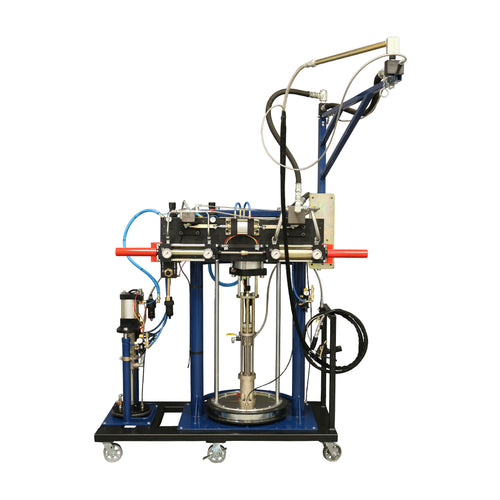
To minimize problems, use a bulk metered system to dispense Sikasil SG-500. These systems typically lead to better consistency, reduced variability, and improved efficiency. Our team recommends the HG 437 silicone dispensing system for production and manufacturing environments. If you are out in the field doing installation or repair work, we recommend the Little Bear compact silicone dispensing system for its space-saving design and all-pneumatic operation.
Of course, the right dispensing system depends on your specific requirements, so you can speak with our team to get a personalized dispensing system recommendation.
Other Application Considerations
Even experienced teams can run into issues when working with Sikasil SG-500. Many of these issues are caused by how the material is handled and applied as poor practices can negatively impact the material’s performance. To avoid these costly errors, it is important to follow best practices, including:
- Maintaining proper joint dimensions and geometry
- Applying the material in controlled environmental conditions
- Allowing adequate cure time before loading
- Storing the material in the original, sealed containers and below 77°F (25 °C)
- Using only tested and approved compatible materials within the glazing system
- Completing application and tooling within the working time to maintain proper adhesion and bead integrity
- Avoiding unapproved or incompatible tooling agents or contaminants that could interfere with adhesion
- Ensuring complete contact between the adhesive and joint substrates during application to achieve proper wet-out
- Allowing each reactive material to fully cure before introducing additional sealants
When you follow all of these best practices, you drastically improve your chances of a long-lasting, durable finished system.
Need More Help?
Sikasil SG-500 is a proven structural silicone for structural glazing applications, but its performance depends on more than just product selection. The surface preparation, application, and dispensing of Sikasil SG-500 all play a critical role.
If you are evaluating Sikasil SG-500 for your next project, our team can help you select the right dispensing system based on your application, production needs, and performance requirements. Contact us to speak with an expert.