
Table of Contents
- E-Chem EP100-SEAL LM Overview
- E-Chem EP75-SEAL Overview
- The Difference Between EP100-SEAL LM and EP75-SEAL
- Ideal Uses
- Application and Dispensing
- FAQs
Bridge deck overlays are designed to extend the service life of concrete, but their long-term performance often depends on the condition of the substrate beneath them. Cracks, moisture, and chloride intrusion can deteriorate a bridge deck if they are not properly addressed before an overlay is installed. Because of this, many contractors incorporate healer sealers into their bridge preservation programs.
Two commonly used products are E-Chem's EP100-SEAL LM and EP75-SEAL. While both are designed to protect concrete, they offer different performance characteristics that may make one better suited than the other for a specific project. In this guide, we'll compare EP100-SEAL LM and EP75-SEAL to help you determine which solution is the best fit for your bridge deck overlay application.
E-Chem EP100-SEAL LM Overview
The EP100-SEAL LM from E-Chem is a 100% solids, low modulus epoxy healer/sealer that is designed for applications where greater movement is required. In particular, it is commonly used in bridge deck overlays when the material needs to move with the deck and not crack.
The two-part epoxy offers great overall bond strength as well as high early strength. It is also moisture insensitive, solvent-free, VOC compliant (<250 g/L), and meets ASTM C881 requirements.
E-Chem EP75-SEAL Overview
The EP75-SEAL from E-Chem is a low-viscosity, two-component epoxy urethane sealer/healer designed to protect concrete from moisture and chloride ions. Compared to traditional epoxy polymer sealers, the EP75-SEAL sealant is engineered to provide a longer service life for concrete. It also is highly penetrating, low viscosity, and moisture insensitive.
What’s The Difference Between EP100-SEAL LM and EP75-SEAL?
While the EP100-SEAL LM and EP75-SEAL E-Chem sealants are similar and used in many of the same types of applications, their varying properties make each product suited for different real-world applications. Our team outlines some of the most notable similarities and differences between the EP100-SEAL LM and EP75-SEAL overlay materials to help you better determine which is right for your unique needs.
| Property | EP100-SEAL LM | EP75-SEAL |
|---|---|---|
| Product Type | Two-component 100% solids epoxy healer/sealer | Two-component epoxy urethane sealer/healer |
| Ratio | 2:1 | 1:1 |
| Bond Strength | Excellent | Excellent |
| Moisture Insensitive | Yes | Yes |
| Viscosity | Low viscosity | Low viscosity for deeper penetration |
| Modulus | Low modulus, enhanced flexibility and movement accommodation | Low modulus |
| Compliance | ASTM C881, VOC | VOC |
| Cure Time at 70-74°F | 3.5 hours | 5 hours |
Ideal Applications
With a better understanding of the differences between the EP100-SEAL LM and EP75-SEAL sealants, you can more confidently determine which product is best suited for your project. While both materials are designed to extend concrete service life and protect against moisture and chloride intrusion, each excels in different situations.
Compared to E-Chem EP75-SEAL, EP100-SEAL LM may be a better choice for bridge deck overlay applications where:
- Greater flexibility and movement accommodation are required
- Thermal cycling and expansion-contraction stresses are an issue
- Long-term durability under dynamic loading conditions is a primary concern
Compared to E-Chem EP100-SEAL LM, EP75-SEAL may be a better choice for bridge deck overlay applications where:
- Maximum penetration in existing concrete is required
- Fine cracks and surface porosity need to be effectively sealed
- Movement accommodation is less critical
In summary, if your project prioritizes maximum penetration into existing concrete, EP75-SEAL may be the better fit. If long-term movement accommodation is more important, EP100-SEAL LM may be more advantageous.
Application and Dispensing
No matter which sealant you select, it is imperative that you apply it correctly to get the best results. Proper surface preparation is critical as skipped steps or poor execution can lead to improper adhesion, poor finishes, or eventual bond failure. For both the EP100-SEAL low modulus epoxy and the EP75-SEAL epoxy urethane, shot-blasting or sandblasting is recommended. This step should be followed by using compressed air to remove debris. Always follow the specifications outlined by the manufacturer to get the best results.
Coupled with proper surface preparation is accurate dispensing. As two-part materials, both E-Chem EP100-SEAL LM and E-Chem EP75-SEAL need precise ratio control and mixing. Inaccurate ratios and inconsistent mixing can lead to numerous problems with the finished overlay, including bond failure in some cases.
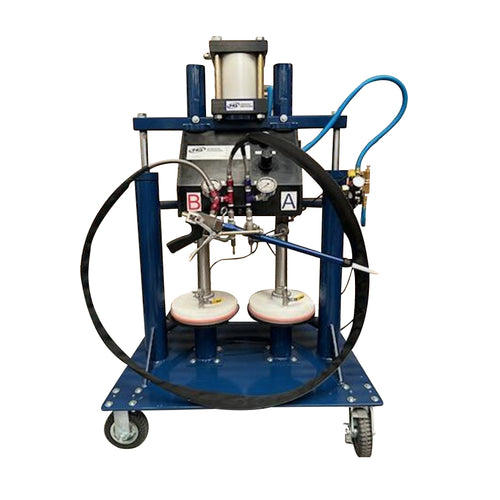
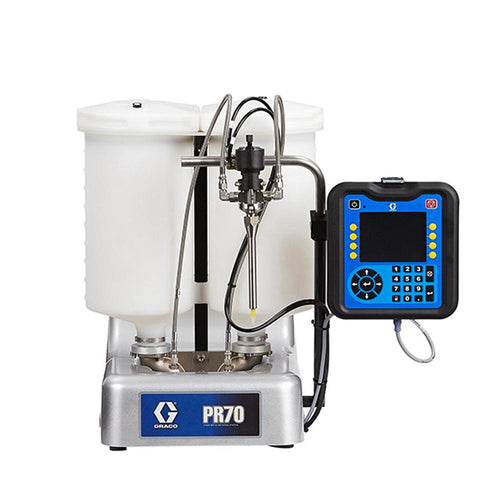
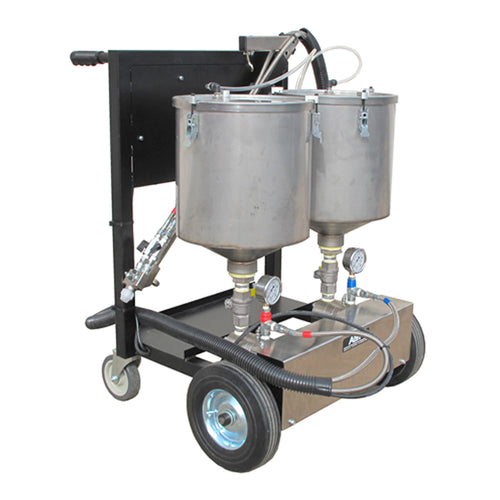
For higher volume applications, consider a bulk metering pump that offers accurate ratio control and handles the mixing for you. The GMP 500 pump for bridge deck overlays is a great choice as it provides precise and continuous flow of materials up to 6 gallons per minute and is compatible with viscosities up to 10,000 cps.
Need More Assistance?
Choosing between the bridge deck overlay sealants is only part of the equation. Proper application and dispensing of the material you choose can make all the difference on your job.
At Dispensing.com, we can help you with the dispensing of both EP100-SEAL LM and E-Chem EP75-SEAL. We carry a wide selection of meter mix dispense equipment and have the expertise to help you choose the right system for your specific needs. Contact our team with your questions.
Hotmelt.com is not affiliated with E-Chem. E-Chem is a brand of the Meridian Adhesives Group Company.