
Table of Contents
- What Is Concrete Crack Repair & Why Does It Matter?
- Materials
- How to Repair Concrete Cracks
- Crack Repair Dispensing Equipment
- Recommended Dispensing Systems
- FAQ
Concrete cracks are a common issue, especially in commercial or industrial environments. Warehouses, parking structures, manufacturing floors, and exterior pavements are all prone to stress, heavy loads, and natural settlement. When cracks appear, contractors need to act quickly to prevent further deterioration and minimize safety concerns.
Successful crack repair is more than just filling the hole. Proper surface preparation, the right material, and reliable dispensing equipment all influence both the quality of the finished repair and the efficiency of the process. In this guide, our team explains more about concrete crack filling repairs as well as how to choose the right material and equipment to support your work.
What Is Concrete Crack Repair & Why Does It Matter?
Concrete crack repair is the process of restoring damaged or fractured concrete by filling, sealing, or bonding cracks that develop over time. Repairing them helps maintain the strength, durability, and safety of the concrete surface.
Initially, concrete cracks may just be cosmetic problems, but they can quickly develop into bigger issues. If left untreated, water, chemicals, and debris can penetrate the concrete and accelerate deterioration, weaken the slab, or create potential safety concerns. Concrete crack repair focuses on addressing the crack before it spreads or causes additional damage. If caught early enough, you can extend the service life of the concrete surfaces and reduce the likelihood of more involved repairs or full replacements.
Cracks can form for several reasons. Some common causes of concrete cracking include:
- Shrinkage during curing
- Thermal expansion and contraction
- Heavy loads or equipment traffic
- Subgrade settlement or soil movement
- Moisture infiltration and freeze-thaw cycles
Depending on the type and severity of the crack, contractors may use different repair methods.
- Crack filling to seal surface openings
- Epoxy injection to restore structural integrity
- Polyurethane injection to stop water leaks
- Surface patching for larger voids or damaged edges
Each repair method uses specific materials and dispensing equipment. Selecting the correct repair approach ensures the crack is sealed or bonded properly to help extend the lifespan of the concrete and reduce future maintenance needs.
Concrete Crack Repair Materials
Selecting the correct repair material is one of the most important steps in a successful crack repair. Different materials perform better depending on crack width, movement, moisture exposure, and whether the repair must restore structural integrity. Contractors must also consider the viscosity and cure profile of the material because these properties determine what type of dispensing equipment will work best.
Our team typically recommends evaluating the crack type and repair requirements before selecting a material. Some materials are designed to bond concrete together, while others focus on concrete crack sealing to prevent water intrusion and contamination.
Some common materials used for concrete crack filling and their ideal use cases are outlined in the chart below.
| Material Type | Key Properties | Ideal Uses |
|---|---|---|
| Epoxy Injection | High-strength bonding, rigid after curing | Structural crack repair in slabs, foundations, and load-bearing concrete |
| Polyurethane Foam | Expands when reacting with moisture | Water-stopping cracks and below-grade repairs |
| Polyurethane Sealant | Flexible and durable | Pavement cracks, sidewalks, and areas with movement |
| Polyurea | Fast-curing and highly durable | Industrial floors and high-traffic concrete environments |
| Cementitious Repair Materials | Similar composition to concrete | Larger cracks, surface patching, and nonstructural repairs |
How to Repair Concrete Cracks

The material used to repair cracks in concrete is only as effective as its application. A successful repair also depends on identifying the crack type, properly preparing the surface, and using the right dispensing equipment. When you follow a structured repair process, you improve both the durability of the repair as well as the efficiency of the process.
While exact steps and processes will vary depending on the crack, material, and equipment, the basic process for concrete crack repair includes the following steps:
1. Inspect the crack
Start by determining the width, depth, and cause of the crack. Hairline cracks may only require sealing, while wider or structural cracks may require injection repair.
2. Clean the crack thoroughly
Remove dust, debris, loose concrete, and contaminants using compressed air, a vacuum, or mechanical cleaning tools. Proper cleaning improves adhesion between the repair material and the concrete.
3. Prepare the crack opening
In some cases, contractors widen the crack slightly using grinding tools or crack routers. This exposes sound concrete and creates a better surface for the repair material to bond to.
4. Select the appropriate repair material
Choose a repair material based on the repair objective. Epoxy is often used for structural repairs, while polyurethane or polyurea materials are used for flexible sealing or fast repairs.
5. Apply the repair material using dispensing equipment
Dispense the material into the crack using a crack filling pump, injection system, or sealant dispenser. Controlled dispensing helps ensure the material reaches the full depth of the crack.
6. Finish the repair surface
Remove excess material and smooth the surface so the repair is level with the surrounding concrete. This step is especially important for areas with heavy foot traffic.
7. Allow the repair to cure
Follow the manufacturer’s recommended curing time before allowing traffic or equipment back onto the repaired surface.
Crack Repair Dispensing Equipment
While manual tools may work for small repairs, larger applications often require pumps or injection systems. In surface repairs or sealing applications, dispensing systems allow contractors to apply repair materials evenly across longer cracks. In structural repairs, pumps help push materials deep into narrow fractures to ensure full penetration. Reliable dispensing equipment can also help contractors reduce waste, increase productivity, and improve overall efficiency.
The biggest challenge for contractors can be determining which type of crack repair equipment best suits their needs. The right solution largely depends on both the repair method and the material being used. Structural repairs, for example, may require a positive displacement pump for controlled injection to ensure the material reaches the full depth of the crack. Sealants, on the other hand, are often applied using dispensing pumps designed to allow contractors to efficiently fill longer surface cracks.
How to Choose
Selecting the proper dispensing equipment is a critical step in repairing cracks in concrete. The right dispensing equipment can help crews complete jobs more efficiently and effectively.
When evaluating what crack repair equipment you need, you should consider the following factors.
- The nature of the repair and the scale of the job
- The type of material being used and its viscosity
- The required dispensing pressure for injection or filling
- The jobsite and portability needs
These considerations help ensure the dispensing equipment can handle the material while delivering consistent results.
Recommended Dispensing Systems for Crack Repair
With so many systems on the market, it can still be overwhelming to determine which is right for you. To help you decide what concrete crack repair equipment you need, our team highlights a few systems below.
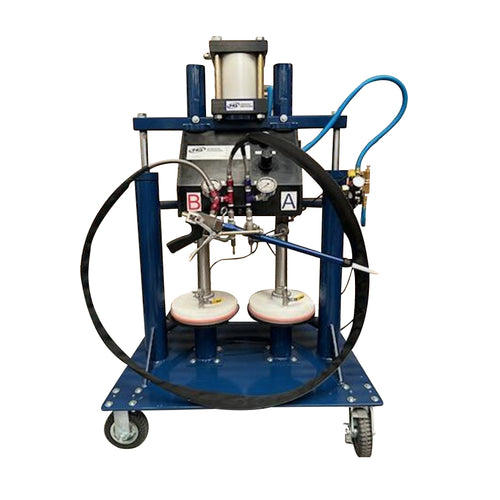
This portable system is compatible with 5-gallon pails and designed for the easy dispensing of single-component materials for crack repair applications like small spall repair, joint filling, and more. It has a continuous flow of up to ½ gallon per minute and can operate at up to 2000 psi to meet the needs of more demanding applications. The system also has an adjustable flow rate and power factor ratio to meet your specific needs.
If you are looking for a piece of equipment that offers a little more output, this system is a great option. It has a flow rate of up to 2 gallons per minute, can operate at up to 3000 psi, and is compatible with viscosities up to 1,000,000 cps. It is a great system for demanding joint filling and sealing applications.
GMP 025 Concrete Joint Filler Machine
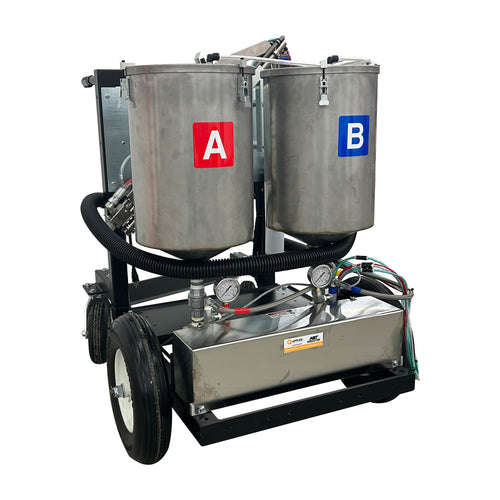
This rugged and cost-effective system is a portable meter-mix system that is compatible with polyureas, unfilled epoxies, unfilled urethanes, and more. It works with fixed ratios of 1:1 to 4:1. It is ideal for joint filling, concrete restoration, small joint sealing, and small spall repair.
Want More Insight?
Concrete crack repair plays an important role in maintaining safe and durable commercial surfaces. When cracks are addressed early, contractors can prevent further damage and avoid safety problems.
Because dispensing equipment is such a key part of successful repair, we want to help you find the best concrete crack repair dispensing system for your needs. If you have questions about the systems mentioned earlier or want more guidance, reach out to connect with our team.