
Table of Contents
Applying adhesive to your product during production should be easy, but anyone who has experience with material dispensing can tell you that there is a lot of room for error. Even small inconsistencies in mixing, dispensing, and application can lead to huge mistakes that can cost your business valuable time and money.
If you are relying on manual application methods, these challenges can become even more pronounced. Especially if you want to scale production or meet specific regulatory requirements, these challenges must be addressed sooner rather than later.
Top Adhesives Dispensing Problems & Solutions
With over fifty years of experience in the fluid and material dispensing industry, our team has worked with manufacturers, contractors, and engineers in different industries and has seen the problems that they regularly face. The good news is that many adhesive dispensing challenges can be minimized. We break down some of the most common challenges of adhesive dispensing as well as their solutions.
Challenge 1: Inconsistent Dispense Volumes & Ratios
One of the most common adhesive dispensing problems is inconsistency in mixing and dispensing. Especially for two-part materials, mixing is an added step that requires precise ratios to cure properly. Manual dispensing methods depend heavily on the operator, which can lead to variations and human error.
Inconsistent mix ratios and dispensing volumes can lead to weak bonds, cosmetic problems, improper curing, and even bond failure. While these issues are often blamed on the material itself, the real problem is usually the dispensing process.
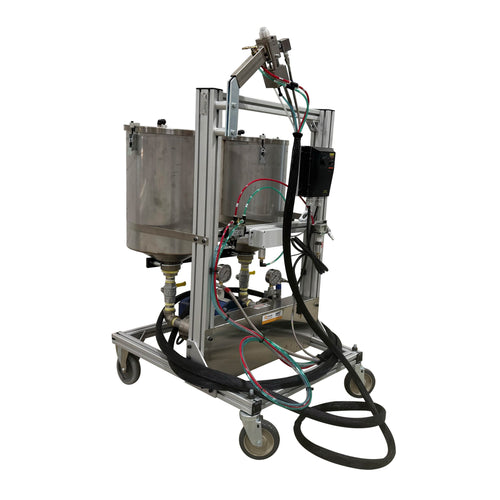
Solution: The most effective way to address this challenge is to use metering and mixing dispensing systems. These systems can dispense materials at a fixed or adjustable ratio every time. This ensures repeatable results and reduces the risk of adhesive failure caused by improper mixing or inconsistent dispensing.
Challenge 2: Operator Fatigue & Strain
Another major problem many manufacturers experience with material dispensing is operator fatigue and the issues that arise as a result. Operator fatigue can lead to safety issues and health concerns for employees.
When performing repetitive tasks over long shifts, fatigue can also lead to more human error. Even skilled operators make mistakes. Especially as production volume increases, fatigue can increase, and human error becomes harder to control. This issue often shows up as inconsistent bead size, missed application areas, or variations from part to part. While they can be small at first, these variations can lead to higher scrap rates and more rework, which can cost the business.
Solution: Dispensing equipment with ergonomic designs can help mitigate operator discomfort and health problems. For lower-volume dispensing, look for glue guns or cartridge guns with ergonomic features like soft grips, modified trigger controls, or lightweight designs. Many semi-automated dispensing machines also offer these features.
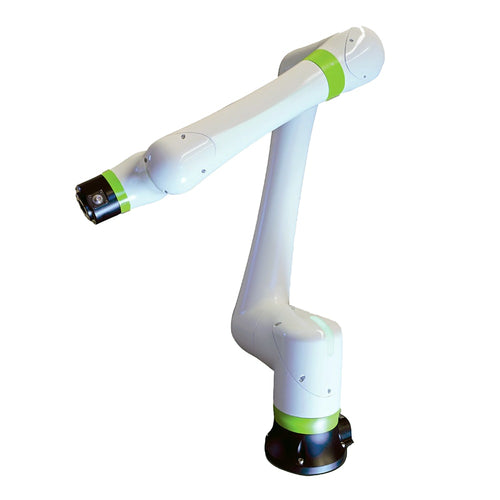
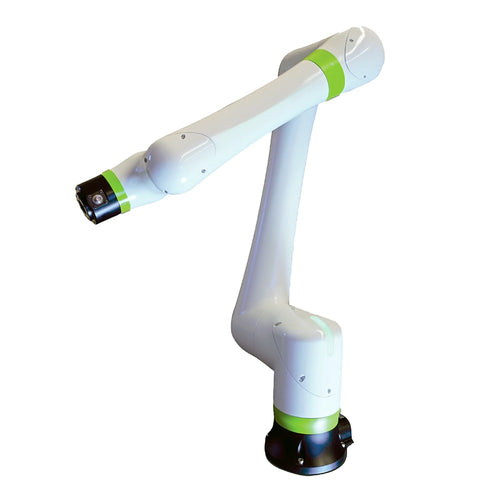
For high-volume dispensing, robot dispensing systems are a strong option. They can take over repetitive and sometimes dangerous tasks that lead to operator fatigue. This allows operators to focus on monitoring quality, loading parts, or solving higher-level problems.
Challenge 3: Wasted Adhesive & Materials
Adhesives are expensive, and wasted materials can quickly add up in costs. Unfortunately, wasted materials are an all-too-common dispensing problem. Manual mixing and dispensing processes can lead to more waste than many companies realize. Over-dispensing, purging, and mixing excess material that cures before it can be used all contribute to higher costs per unit.
Waste also increases cleanup time and disposal costs. Over time, this can significantly impact your overall production budget.
Solution: Bulk dispensing systems can help reduce material waste compared to manual dispensing options. For two-component materials, meter mix systems are designed to mix the parts only when needed and in the exact amount required, which helps eliminate premature curing and unnecessary waste.
Challenge 4: Quality Control
As line speeds increase and output grows, maintaining consistent quality becomes more difficult. Although automated systems can minimize the risk of errors, improper placement, missing adhesive, and bead discontinuity can still occur. Manual inspection cannot always keep up, and defects may not be discovered until later in the process. By then, the cost of correcting those errors is much higher.
Solution: Integrating automated dispensing equipment with robot vision systems provides quality control for adhesive dispensing. These systems can verify bead placement, presence, and coverage. Some systems, such as the Coherix inline bead inspection system, can be integrated directly into the manufacturing process to enable adaptive process control and correct mistakes in real time.
Challenge 5: Safety Problems
Safety is a major concern for many manufacturers. Adhesive dispensing can involve toxic or hazardous materials, heavy lifting, and repetitive motions that strain operators. In manual dispensing, workers are often directly exposed to these dangers.
While automated industrial robots can reduce many of these risks, they can also introduce new safety concerns. Traditional industrial robots often require protective barriers and fixed layouts that are not practical for every operation.
Solution: Collaborative robots offer a balanced solution. They can take over dangerous or repetitive dispensing tasks while being designed to work safely alongside people. Cobots do not require safety barriers and will shut off automatically if a worker gets too close. They are ideal for adhesive dispensing applications that still require flexibility and human oversight.
How to Choose the Right Adhesive Dispensing Solution
There are many options available when it comes to adhesive dispensing. To narrow down your choices, it helps to understand your specific requirements. Our team recommends asking the following questions when selecting a dispensing system:
- What type of material are you dispensing? Is it one-component or two-component?
- What volume of material are you dispensing?
- What material and fluid dispensing problems do you currently face?
- What are your priorities: budget, output, precision, or repeatability?
- What level of automation do you need?
- Are you planning to scale your production in the future?
Once you have answers to these questions, you can begin narrowing down your dispensing options.
Find the Right Solution for You
Adhesive dispensing challenges are common, but they do not have to be the norm for your business. If you are experiencing material and adhesive dispensing problems, our team may be able to help. By investing in the right dispensing system, you can address these challenges while improving efficiency and productivity.
With a wide range of dispensing systems available and experience in equipment integration, our team can help you find the right solution for your specific needs and incorporate it into your production process.